Analysis: The 1841 census of Waters Upton (Part 2)

⇐ Back to Part 1

Employment

Work in Waters Upton: who was engaged in it, what types of employment were there, and – in the case of jobs ‘in service’ – who provided that work, in 1841? These are questions I set out to answer by analysing data from the census.
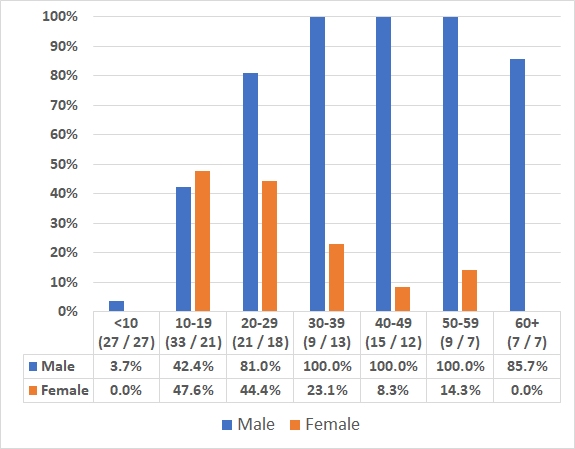
A twin bar chart based on data from the 1841 census of Waters Upton, showing the proportion of males and females recorded as being in employment, broken down into 10 year age groups. Further explanation in article.

Employment rates for those enumerated on the 1841 census at Waters Upton, broken down by age and sex.

It is readily apparent from the chart above that gender and age were major factors determining whether or not you were in employment – as recorded by the census – in early Victorian Waters Upton. You were highly unlikely to be working if aged under 10 whatever your gender – unless you were a 9-year-old boy named Levi Woolley, in which case you were employed as a servant by farmer Charles Allen.

In the age group 10-19, between 40 and 50% of both males and females were in work, with a slightly higher proportion of females (though this difference may not be statistically significant). From age 20 upwards there were sharp differences between the sexes in their rates of employment. 81% of men (17 out of 21) aged 20-29 and 100% of men aged 30+ were earning a crust in one way or another, with one Thomas Shuker (aged between 70 and 74, and of independent means) being the sole exception.

For women, rates of employment (employment in fields deemed worthy of inclusion on the census at any rate) began to fall once the age of 20 was reached. Not by much at first – from 47.6% (10 out of 21) in the age group 10-19, to 44.4% (8 out of 18) in the 20-29 range – but then down to 23.1% (3 out of 13) at 30-39 and less than 20% from 40 to 59. None of the 7 women aged 60 or more who were enumerated at Waters Upton in 1841 (2 of whom were, like Mr Shuker, of independent means) were employed.

Marriage and motherhood no doubt played a large part in the different rate of adult employment for women compared with men. You can bet your life however that many of those apparently unemployed women were working very hard indeed, and not just bringing up the children and carrying out ‘domestic duties’ or ‘household work’. With regard to the wives of farmers, for example, Joseph Plymley in his General View of the Agriculture of Shropshire (published 1813) quoted a Mr Price as saying:

[In] the farm-houses, there seems to be a greater exertion of industry than I have remarked in most other counties. Besides brewing, baking, providing for the family, where workmen are maintained in the house, and managing the dairy, the farmer’s wife, with the assistance of her maid-servants, in the evenings, at spare hours, carries on a little manufacture, and gets up a piece of linen cloth for sale, every year. [Page 123]
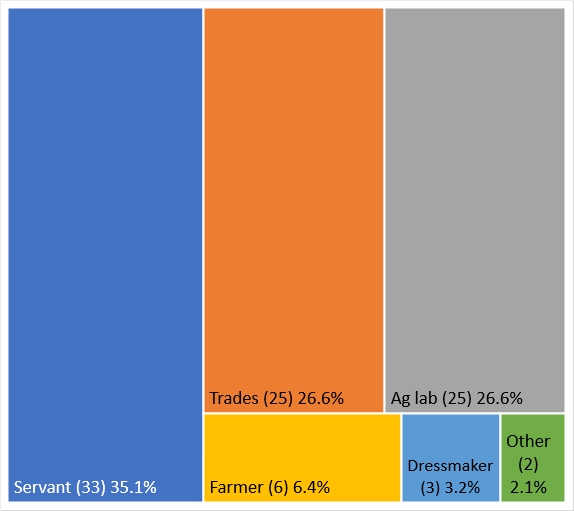
A chart, based on data from the 1841 census of Waters Upton, showing the number and proportion of those recorded as in work, in six categories of employment. Further explanation in article.

Types of employment in which those enumerated on the 1841 census at Waters Upton were engaged. The area of the chart taken up by each type equates to the percentage of those 94 people in employment who were engaged in them. With numbers and percentages shown for each type.

This chart provides a broad overview of the types of work in which the working population of Waters Upton (41.6% of the total) was engaged in 1841. Just over a third of all of those in work were servants, a type of employment I will explore in more detail shortly.

The next most ‘popular’ fields of employment were, each giving work to slightly more than a quarter of the working population, were the humble and ubiquitous agricultural labourer, and what I have called ‘trades’. Both of these areas of work were male-dominated, to the almost total exclusion of women – the only women working in either of them being Ann Morris, who like her husband William was recorded as an ‘Ag Lab’.
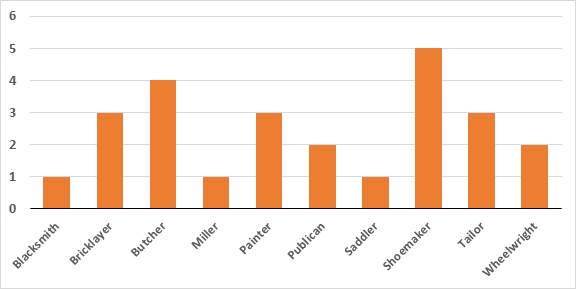
A bar chart, based on data from the 1841 census of Waters Upton, showing the number of people employed each type of employment in my category of 'trades' (blacksmith, bricklayer, butcher, miller, painter, publican, saddler, shoemaker, tailor, wheelwright). Further explanation in article.

A breakdown of the numbers engaged in the various occupations included in ‘trades’.

The trades, as I have termed them, included a variety of different occupations. The majority of these were skilled or semi-skilled and would earn their practitioners a place in the lists of trades people in the county directories which became increasingly popular during the Victorian era. Clustering these occupations together in this way certainly makes for a much less cluttered employment types chart!

6 men in Waters Upton were described as farmers on the 1841 census, a ‘field’ of employment (pun intended) very much limited by the small size of the parish. The remaining workers were 3 dressmakers (all female, ages given as 15, 20 and 35), a schoolmistress (the widowed Harriet Woolley), and the parish clergyman William Corfield (who could in fact be considered as a farmer, as his position brought with it some 35 acres of farmland for his use).

Servants
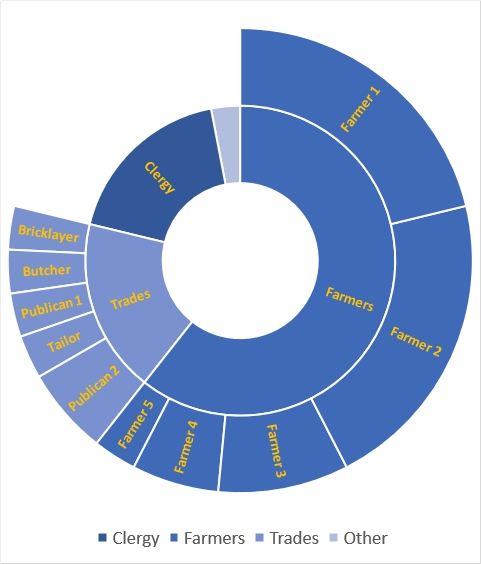
A ring chart, based on data from the 1841 census of Waters Upton, showing the proportion of servants employed by people in four categories of employer (farmers, trades, clergy, and other). Further explanation in article.

Employers of the servants enumerated on the 1841 census of Waters Upton. Each of the smallest segments on the outer ring represents one servant employed by an employer, with the larger segments in proportion.

I said I would return to the servants, and here we see who employed them. The majority worked for the parish’s farmers, those identified as farmers 1 through to 5 being: John Dickin (7 servants), Thomas Whitfield (also 7), Thomas Matthews (3), Charles Allen (2, including the above-mentioned Levi Woolley), and John Brown (1 servant) respectively. Honorary farmer William Corfield, the Rector, employed 6 servants, who were probably divided between domestic and farming services. A further 6 servants were in the employ of 5 of the parishioners who were engaged in trades, including both publicans. Finally, in the inevitable ‘Other’ category, man of (independent) means Thomas Shuker employed 14-year-old Staffordshire-born Mary Pritchard to assist in the household he occupied with his wife Charlotte.
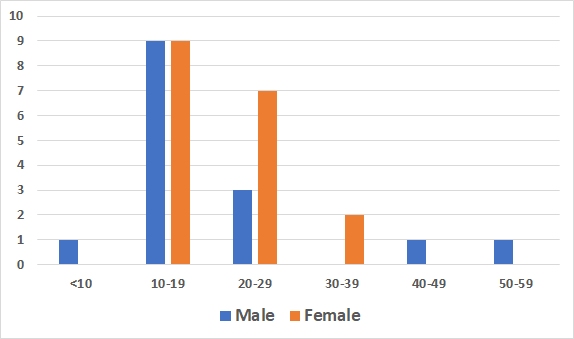
A twin bar chart, based on data from the 1841 census of Waters Upton, showing the number of males and females in 10 year age groups (under 10 to 50 - 59) employed as servants. Further explanation in article.

Numbers of servants on the 1841 census at Waters Upton, broken down by age and sex.

Finally in this section, a closer look at servants which provides information of some relevance to the employment rates (for females in particular) in the age groups of 10-19 and 20-29, and also to migration in those age groups.

All but 5 of Waters Upton’s servants in 1841 fell into the 20 year age range of 10-29. Of the 10 females aged 10-19 who were employed – none of whom were born in the parish – 9 were servants, and all but 1 of the 8 women in the 20-29 age group – only 1 of whom was born in the parish – were also servants.

The situation for males was rather different, with 9 out of 14 working 10-19-year-olds employed as servants (5 of the 14, of whom 2 were servants, were born in the parish), and only 3 of 17 working 20-29-year-olds (6 of the 17, only 1 of whom was a servant, were born in the parish).

All of which leads us quite neatly on to…

1841 to ’51 – who were the ‘remainers’?

(Maybe I should have given this section a more scientific-sounding title like ‘Residential fidelity’?)
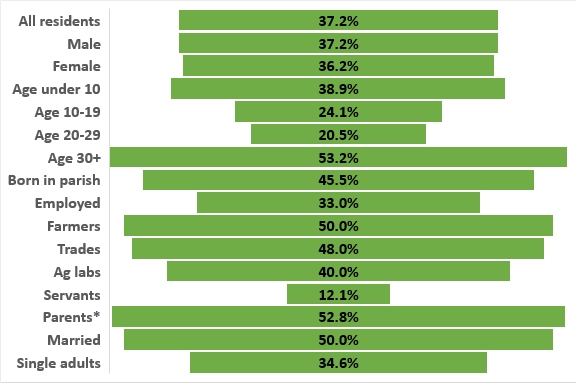
A chart, based on data from the 1841 and 1851 censuses of Waters Upton, showing the percentage of people in each of 16 categories who were enumerated in the parish in both 1841 and 1851. Further explanation in article.

Percentages of various categories of people enumerated on the 1841 census at Waters Upton, who were also enumerated in the parish on the 1851 census. ‘Parents’ I defined as those who, whether married or single, had children aged under 20 at home with them.

As my 1841 census abstract includes links to the 1851 abstract for those who were also present at Waters Upton on the latter census, it was an easy task for me to identify the ‘remainers’ (or in some cases perhaps, to borrow an expression from family historian John Titford ⇗, the ‘bounce-backers’) and add that information to my 1841 census spreadsheet. And then to analyse the data to see if there were any factors which made people enumerated in 1841 more or less likely than on average to remain, or return…

As you can see, the average percentage of all residents of 1841 who were also present in 1851 was 37.2%. Of the 15 categories of people from 1841 which I looked at, there were several for which there was no significant difference from that overall rate of ‘remaining’. These were: sex (male or female), age under 10 in 1841 (only a slightly higher likelihood of remaining), working as an agricultural labourer in 1841 (just slightly more likely to remain), employed (regardless of employment type) in 1841 and single adult in 1841 (both of the latter giving a slightly lower likelihood of remaining).

Natives of Waters Upton who were present in the parish in 1841 were rather more likely to remain (6% more than the average), while those who were married, or parents, were significantly more likely to enumerated there again in 1851 (many people in the former group would also have fallen into the latter). The ‘remain rate’ for these categories (50% and 52.8%) was very similar to that for the 30+ age group (see next) – a category with which there was likely to have been a fair degree of overlap.

Those aged 30+ in 1841 were significantly more likely to stay (53.2% in this category remained), perhaps because many of them had by that age established strong ‘roots’ – such as ties of kinship and/or security of employment – in the community. I have not divided this category further in the chart above because I found very little difference between the various 10-year age groups within it.

Those aged from 10 to 29 in 1841 on the other hand were significantly less likely to remain, with 20-29-year-olds showing even less attachment than the 10-19-year-olds. People in both of these groups were, I suspect, more likely to leave to take up work elsewhere and, particularly in the 20-29 age group, to join marriage partners and raise a family in a location which could accommodate them.

Regarding work, we have already seen that being employed in itself made a person less (but not significantly less) likely to remain, while being an ‘ag lab’ only very slightly raised a person’s chances of staying. Employment in certain other categories did however make a significant difference, with those engaged in trades much more likely to remain. The same goes for farmers, although with only 6 of them in the parish that conclusion can only be accepted with caution (if just one more had left, their remain-rate would have dropped to 33.3%).

Of all the categories I have examined, servants were the least likely to stay in the parish – just 12.1% of those enumerated in 1841 were still in Waters Upton (as servants or otherwise) ten years later!
Analysis: The 1841 census of Waters Upton (Part 1)

The census is not just for genealogy and family history, it’s for local history too – including the specialised form of local history known as one-place studies. In the UK, a decennial national census began in 1801. The information recorded was rather limited in the first few decades (that is, up to 1831). Furthermore, with relatively few exceptions, the enumerators’ schedules from those censuses have not survived and we are left with collated summaries of the data collected.

The census of 1841 was the first which aimed to record every person, by name, in every household (along with their age, sex, occupation and – to a limited extent – their place of birth). It is also the earliest census for which the enumerators’ schedules have been retained. The information it recorded – as you will see in my 1841 census abstract – was not as detailed as in the censuses which followed, but genealogical research can add much of what was missed. Having carried out that research, and having analysed it with the aid of a trusty Excel spreadsheet, I now present what I have learned about the community of Waters Upton at the first census of the Victorian era.

Population

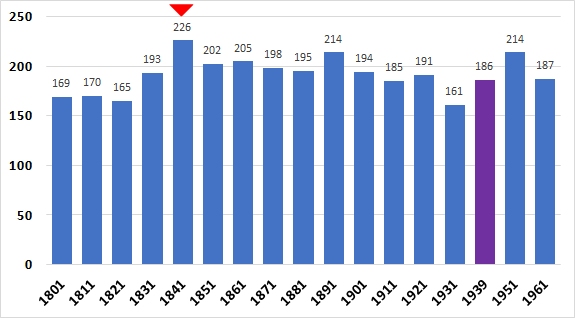
A bar chart showing the population of the parish of Waters Upton as recorded by the decennial census from 1801 to 1961. Further explanation in article.

The population of Waters Upton parish as recorded in the national census of England and Wales at 10-yearly intervals from 1801 to 1961 (with the 1939 National Identity Register filling in for the cancelled census of 1941). Based on official figures taken from A Vision of Britain Through Time ⇗, with the exception of those for 1841 (adjusted by me, see below), 1861 and 1871 (my own figures as they are not given by the aforementioned source), and 1939 (derived by me from the National Identity Register).

As you can see, the population of Waters Upton in 1841 (even though I have lowered it by 2 from the official figure of 228) is the highest recorded in the 160 year period from 1801 to 1961. Hopefully when I analyse later censuses, this will shed some light on why that was – a random ‘baby boom’ in the 1830s?

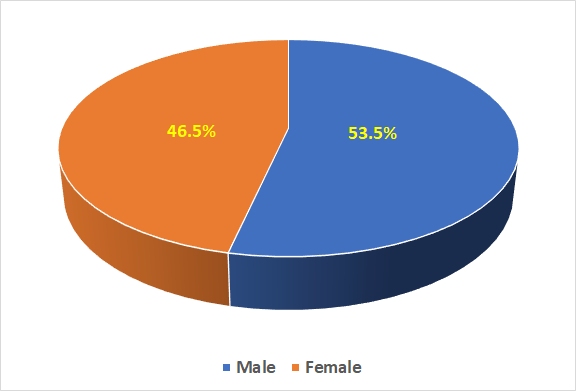
A pie chart showing the proportion of males and females enumerated in the 1841 census of Waters Upton: males 46.5%, females 53.5%.

The proportion of males and females in Waters Upton in 1841. Of the 226 people enumerated in Waters Upton in 1841, 121 (53.5%) were male and 105 (46.5%) were female.

The bias towards males shown here is in contrast to the national figures: females have predominated in all census years (in 1841 the census of England and Wales showed a national split of 48.85% males and 51.15% females). Was this contrast the result of Waters Upton being a rural parish, with greater employment opportunities for men? Or was it perhaps an artefact resulting from a random fluctuation in a very small population unit? Perhaps it was a little of both. In Shropshire as a whole the male/female split in 1841 was almost equal (49.9% males / 50.1% females), while in Ercall Magna (Waters Upton’s larger, but still rural, neighbour) it was 50.9%/49.1% and in Shrewsbury St Chad (predominantly urban) it was 45.2%/54.8%. (Percentages based on figures from A Vision of Britain Through Time – Male and Female totals for England and Wales, Shropshire, Ercall Magna, Shrewsbury St Chad ⇗).

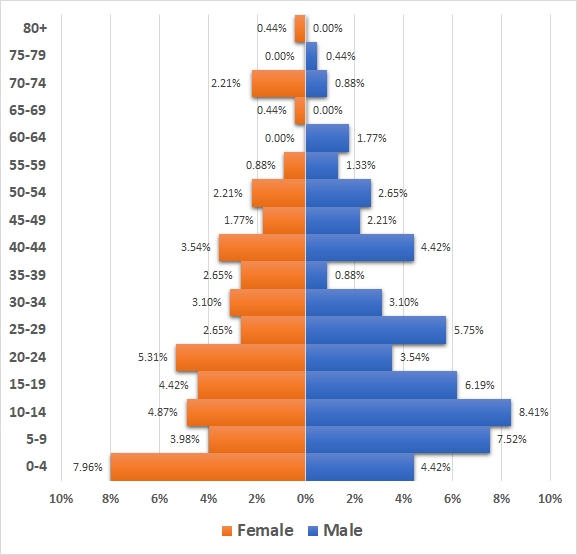
A population (or age-sex) pyramid chart based on 1841 census data for Waters Upton. It shows the proportion of males and females in each 5-year age group from 0-4 (at the bottom) to 80+ (at the top) The resulting chart does not actually bear much resemblance to a pyramid. Further explanation in article.

A population pyramid (or age-sex pyramid) diagram showing the population of Waters Upton in 1841 split by age and sex. Yes, I know it’s usual to display the males on the left!

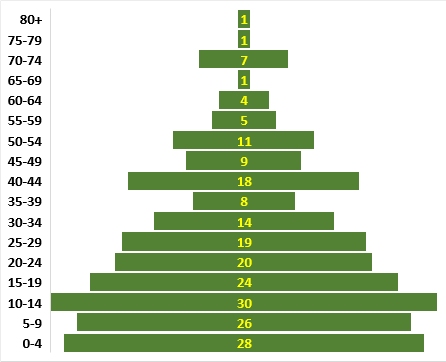
Dividing a population of just 226 people into a chart with 34 categories (17 age groups split into male and female) has made a rather ragged Christmas tree instead of a pyramid! But as a friend and former work colleague of mine would say, it is what it is. Reducing the number of categories should smooth things out a little, so here is a funnel chart displaying the age categories alone (with a dark green colour to ensure the Christmas tree effect is not entirely lost):

A variation on the population (or age-sex) pyramid chart - a funnel chart - based on 1841 census data for Waters Upton. It shows the total number of people in each 5-year age group from 0-4 (at the bottom) to 80+ (at the top). Further explanation in article.

Apart from some obvious fluctuations from the broad trend, the chart has a wide base and narrow top. This is indicative of a population with high birth and death rates (according to The Data Visualisation Catalogue ⇗), which was probably the case at the beginning of the Victorian era generally and not just in Waters Upton.

Of course, population size and structure in any given area is affected not just by birth and death rates, but also by rates of immigration and emigration. These factors – especially emigration – would certainly have been at play in Waters Upton, a small, rural parish with very limited scope to support an increased population.

Immigration

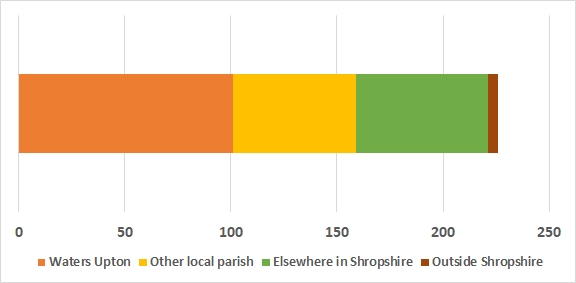
A single horizontal bar chart based on my research into the people enumerated at Waters Upton on the 1841 census, showing their geographic origins. Further explanation in article.

The geographic origins of the people enumerated on the 1841 census at Waters Upton. This not an analysis which can be performed by reference to that year’s census alone, as it only recorded whether or not people were born in the county in which they were then living (or, if born outside of England and Wales: Scotland, Ireland, or ‘Foreign Parts’). However through genealogical research I have established with reasonable certainty the birthplaces (to at least parish level) of 179 of the 226 people enumerated at Waters Upton. Identification of those born in the parish, by reference to baptism records, was relatively easy but some may have been missed. ‘Other local parishes’ are those within a radius of about 7 miles (or thereabouts) from Waters Upton: Hodnet, Stoke on Tern, Great Bolas, Childs Ercall, Hinstock, Chetwynd, Edgmond, Longford, Lilleshall, Kinnersley, Preston, Eyton, Wombridge, Wellington, Wrockwardine, Longden on Tern, Withington, Rodington, Ercall Magna, Shawbury and Stanton on Hine Heath. It is likely that a fair proportion of those whose births I have assigned to ‘elsewhere in Shropshire’ were in fact born in one of the ‘other local parishes’ just listed.

As you can see, in 1841 close to half of the people enumerated in Waters Upton were born in the parish. This does not necessarily mean that they had lived all their lives in the parish up to that point, but I suspect many (especially the younger ones) would have done. The rest came almost exclusively from elsewhere in Shropshire, with about half of them (in reality, probably at least two thirds) from the local parishes listed above. This indicates both immigration to and emigration from the parish, with incomers originating from the local area or further afield within Shropshire. Just 5 people were born outside of the county: 1 from neighbouring Staffordshire, 3 from Suffolk (there’s a story there!), and 1 from an extra-Salopian county which I have not been able to pin down.

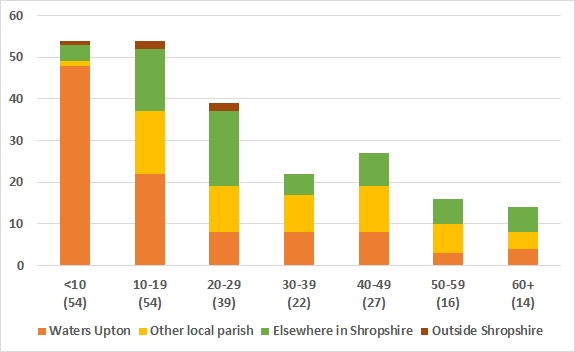
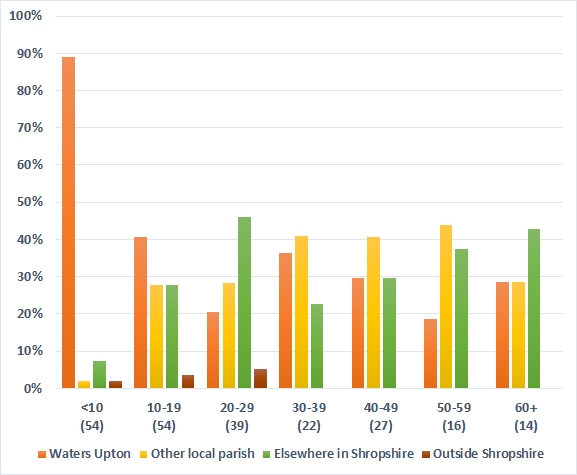
A bar chart based on my research into the people enumerated at Waters Upton on the 1841 census, by age group, showing their geographic origins. Further explanation in article.

Two charts showing the geographic origins of the people enumerated on the 1841 census at Waters Upton, broken down by age group. Notes for the first chart in this section apply. The first chart shows actual numbers in each age group, the second shows percentages.

In a small parish unable to accommodate a growing population you would expect that, all things being equal, the chances of any given individual moving away will increase as they get older (not to mention the chances of them dying). A higher proportion of natives within the younger element of the population rather than within the ‘oldies’ is therefore not a surprise – but the actual extent of this within the under-10s (88.9% of whom were born in the parish) I find somewhat staggering! The dramatic drop to 40.7% for those aged from 10 to 19 is also quite striking. For older age groups although the proportion of natives fluctuates, the actual number in the 20-29, 30-39 and 40-49 groups is equal (8 for each group). Clearly, all things were not equal when it came to the chances of someone leaving the parish!

On to Part 2

John Thomas Halke and the Church of Waters Upton

The Rev John Thomas Halke was Curate of the parish of Waters Upton from 1859 until 1867. When he departed the village, John took with him a gift of silverware from the parishioners, along with their best wishes. He left behind him a long-lasting monument to his endeavours: a newly-built church which, with a few modifications, still stands today.

The ministry was in the blood of the Halke family. Richard Halke of Kent was educated at Corpus Christi, Cambridge, and ordained as Deacon in 1766 then as Priest in 1768. He served thereafter as Curate and Vicar, mainly in Kent, until his death at the age of 70 in 1813. Richard’s sons Charles (born abt. 1784) and James (born 1787 at Faversham, Kent) were also educated at Cambridge. Charles passed away aged about 20 in 1804, but James went on to follow in his father’s footsteps. After holding several curacies in Kent, in 1831 he became the Vicar of Weston-by-Welland in Northamptonshire. It was there that Richard’s son John Thomas Halke was born on 7 May 1832.

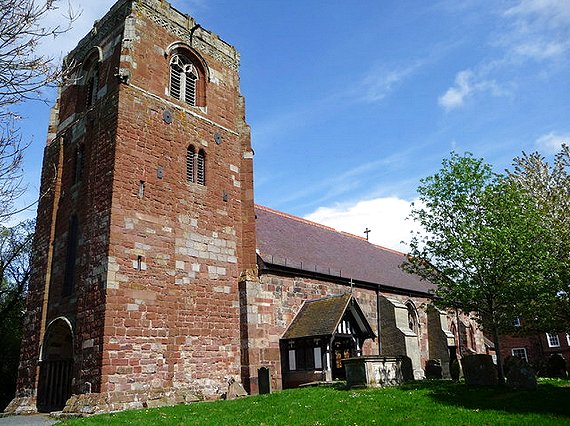
Commencing his education at Uppingham School, John was then admitted to St John’s College, Cambridge, in 1851. He obtained his LL.B. in 1858, by which time he had lost his father (in 1853) and been ordained as Deacon (in 1856), appointed Curate of Atcham in Shropshire (also in 1856; the church of Atcham St Aeta is pictured below) and ordained as Priest (in 1857).

Colour photo of the church of Atcham St Eata. There is a sturdy-looking tower of redish-brown stone on the left, with the rest of the building, of a paler stone, extending to the right. A porch, and two buttresses, can be seen.

“the kindness of the Rev. J. T. Halke, curate of Atcham

John set up home in Shropshire with his widowed mother Mary (the marriage of James Halke and Mary Starr had taken place at Canterbury, Kent, in 1817). Something of John’s character, and of the esteem in which he and his mother were held, can be gauged from the following report published in the Shrewsbury Chronicle of 7 August 1857:

On Wednesday week last, an evening of great pleasure was spent at Chilton, through the kindness of the Rev. J. T. Halke, curate of Atcham, he having invited the wives of the labourers, and other working classes of the parish, to a tea-drinking; also the children from the Union, in all numbering about 230. They began to assemble at about half-past three o’clock, and after having enjoyed a most excellent tea, dancing was commenced by the elder party, and bag races and other games for the children. The amusements drew to a close at 9 o’clock, and after having sung God Save the Queen, and given three cheers for the Rev. J. T. Halke, and the mother of the rev. gentleman, they all separated with many good wishes, and hearts full of gratitude to their kind benefactor.

John’s time at Atcham was short but sweet. His “general kindness the poor and needy, attention the sick and dying, and his friendly visits to the infant school, rendered him a general favourite in the parish”, but in the summer of 1859 he was appointed to the curacy of Waters Upton. The first baptism John performed at his new church took place on 19 June that year. He did however return to Atcham later in 1859 for a final farewell from his faithful flock. The Wellington Journal of 8 October 1859 carried the following notice:

Presentation.—The Rev. J. T. Halke having resigned the curacy Atcham for that of Waters Upton, the parishioners determined to present him with a testimonial on his leaving them, he having gained great respect by the zealous and untiring manner in which he performed the office of minister amongst them; they accordingly assembled on Friday week, at the Berwick Arms Hotel, and read a very feeling address. Mr. Halke replied suitably. The testimonial consisted of a tea service which was very chaste and beautiful (furnished by Mr. Nightingale, of Shrewsbury), and bore the following very appropriate inscription:—“Presented to the Rev. John Thomas Halke by the parishioners of Atcham, as a reward of their sincere respect and affectionate regard. September, 1859.” The obverse side bore the family arms and motto.

“an admirable sermon, […] by the Rev. J. T. Halke, of Waters Upton”

At Waters Upton, John Halke and his mother continued in the same spirit which had endeared them to the inhabitants of Atcham. In 1860 their names headed a subscription list set up to pay for the children of the Industrial School near Waters Upton to have a day out on the Wrekin. John also accompanied the party, and with others he “contributed not a little to heighten the enjoyment of the children by participating with them in their amusements”.

Preaching, of course, also formed part of John’s duties, and it was not confined to the church in Waters Upton. In the Autumn of 1861, for example, at the Harvest Festival held at Uffington in Shropshire, “an admirable sermon, both in matter and delivery, was preached by the Rev. J. T. Halke, of Waters Upton, from Jeremiah v. part of the 24th verse: ‘He reserveth unto us the appointed weeks of the harvest.’”

A full picture of John Halke’s duties at Waters Upton is difficult to paint, as the burial and marriage registers covering his curacy are still in use and not available to peruse. However, as with his sermons, his performance of the rites and ceremonies of the church was also carried out in other parishes from time to time. To give just one example, in 1862 Edward Ryley of Little Drayton and Mary Ellen Atcherley of Ercall Magna were married at High Ercall by “John T Halke, Curate”.

The only marriage that I know of which was conducted at Waters Upton during John’s curacy was quite possibly the last one to be held there before the existing church was demolished. John Higgins Esquire of Lubstree Park and Elizabeth Groucock of Meeson in the parish of Great Bolas were wed on 9 June 1864. By that time it had already been announced that the money for rebuilding Waters Upton church “on an enlarged plan” was ready.

“rebuilding the church of Waters Upton”

In July and August 1864, notices appeared in Shropshire and Staffordshire newspapers calling first for “about eight or ten good masons” and later, “six or eight good stonemasons” to work on Waters Upton Church. One of the stonemasons who responded to these advertisements was a man by the name of Thomas Parry, who had an unfortunate experience when he looked for lodgings in Wellington (see 1864: A charge of felony in Crime, elsewhere on this website).

A letter from John Halke appealing for contributions towards the cost of the project, no doubt written in 1864, was published in The Herts Guardian in May 1865 (by which time, although funds were still needed, work was almost complete). It sets out the reasons why the rebuilding of Waters Upton church was considered necessary:

Application has been made for aid towards rebuilding the church of Waters Upton, Salop. The curate writes in behalf of what he styles a work of necessity, and states:—“The living has been sequestered for many years, and I have consequently, sole charge of the parish. The population is not very large, but, as some of the poor inhabitants, of the two adjoining hamlets, are in the habit of attending this church, (all of them being from two to four miles distant from their own), it is quite too small for the congregations, and is much out of repair, and being besides, a most unsightly structure, it is thought advisable to take it down, and rebuild it on a larger scale, at a cost of about £1500. This most desirable object can only be obtained by subscriptions. I shall receive therefore, with much gratitude, the smallest contribution, even a shilling in stamps.—Yours very respectfully, John T. Halke.—Any remittance by post order may be made payable on the Wellington office to Rev. John T. Halke, Waters Upton, Salop.”—The list of subscriptions enclosed amounts to about £800, so that above half the required sum is promised. The Bishop of Lichfield gives £10; probably some of our opulent readers may be disposed to aid.
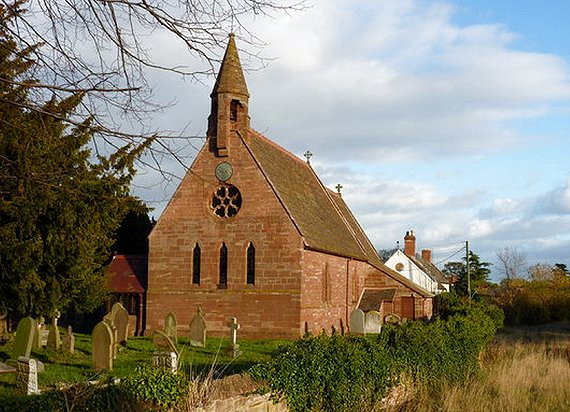
Colour photo of the church of Waters Upton St Michael. A small building of reddish-brown sandstone, with a bell turret at the end closest to us. Part of the churchyard, with its gravestones, can also be seen.

On 23 May 1865, John Halke’s dream of a new church for Waters Upton became reality (see above for a modern-day photo of the building). The Staffordshire Advertiser of 27 May reported as follows:

The parish church St. Michael’s, Waters Upton, Salop, was re-opened on Tuesday, and consecrated by the Right Rev. the Lord Bishop of the Diocese. The old building had long been in a state of complete dilapidation and was quite unfit for the purposes of public worship. When the Rev. J. T. Halke came to Waters Upton, six years ago, he wished to remedy this state and received such promise of support that the tottering ruin was levelled to the ground, and a very handsome and commodious new building erected by Mr. Cobb, of Newport, at a cost of about £1,800. At the conclusion of divine service in the morning, the burial ground was consecrated, after which the company sat down in an adjoining field to a cold collation. Collections took place after each service, and a handsome sum was realised towards paying off the portion of debt which still remains on the building.

The Mr Cobb who erected the church was most likely John Francis Cobb, son of the late John Cobb, architect and builder, of Chetwynd End near Newport, Shropshire. The design of the new place of worship however was Essex-born architect George Edmund Street, who already had a number of ecclesiastical buildings large and small to his credit. Described in modern times as a “small, cheap but carefully detailed church”, St Michael’s was constructed in Early English style from red sandstone ashlar, with a tiled roof, and an octagonal bellcote (or bell-turret), corbelled over the West gable. It is now a Grade II listed building.

“we leave [Waters Upton] with deep regret”

John Thomas Halke was not destined to enjoy the fruits of his labours at Waters Upton for very long. He had been undertaking the role of Curate for the Rector of the parish. But in August 1865 it was announced that “The Lord Chancellor’s rectory of Waters Upton, near Wellington, in this county, has become vacant by the death of the Rev. Richard Corfield, M.A. formerly of Clare College, Cambridge, who was presented by Lord Chancellor Eldon in 1822.” At the end of the following year, this report appeared in the Shrewsbury Chronicle:

Testimonial to Mrs. Halke and the Rev. J. T Halke.—The living of this parish has recently been purchased (under Lord Westbury’s Act) by John Taylor, Esq., and presented to his nephew, the Rev. John Bayley Davies. The Rev. J. T. Halke has had the sole charge of the parish for the last eight years, and during that time he has performed his duties most faithfully and zealously, administering in every way to the temporal and spiritual wants of the poor, and being at all times profuse in his charities to them. When he entered the parish the church was an old, ugly structure, and through his exertions a new church, of very beautiful design, has been erected by public subscription. When it was made known that he was about leaving this parish to remove to [Withington], a subscription was at once commenced, by general consent, and to which every parishioner, without exception, most willingly contributed—even the poorest gave their mite. A sufficient sum was soon collected to purchase a handsome and useful present of the following articles, all in silver:—Two handsome sugar vases, 12 fish knives and forks, asparagus tongs, and large fish fork. These were presented to Mr. Halke and his mother, Mrs. Halke, who had given such valuable and kindly aid in his efforts for the good of the people. It may not be out of place to give the pleasing reply which was received by each contributor:—
“Waters Upton Rectory, Dec. 12th, 1866.
“My dear Parishioners and Friends,—I beg to offer you my own and my mother’s heartfelt thanks for the beautiful and costly token of regard and esteem which we have just received from you. We shall value it as long as we live, as a testimony of your liberality, and still more for the kindly feeling with which it is given. The eight years of our abode at Waters Upton have been among the happiest of our lives; we leave it with deep regret and shall ever remember it with the warmest affection. For a time, at least, we shall have the satisfaction of regular intercourse, and wherever our future lot may be cast, we shall ever look back with pleasure to the period of our residence here. Dear Parishioners and Friends, I once more thank you from my heart for your beautiful present, and for all your kindness towards me.—Believe me, to be your very sincere Friend and Pastor,
“John T. Halke”

John began performing baptisms at Withington on 28 October 1866, but continued his curacy at Waters Upton into 1867, conducting his last baptism there on 24 February that year. Wednesday 7 March 1867 was “appointed by the Lord Bishop of this Diocese to be held as a day of prayer and humiliation on account of the cattle plague” and on the morning of that day John “preached from Jeremiah vii. 3.” at Waters Upton. If this was not his final sermon at Waters Upton, it was certainly one of the last that he preached there.

On 30 January 1873, at St Cross in Winchester, “the Rev. John T. Halke, Vicar of Withington, Salop” was married to “Lucy, eldest daughter of the late Richard Meredith, Esq., of Bishop’s Castle.” The couple had four children at Withington, and John passed away there on 8 September 1915 at the age of 83. A stained glass window, in memory of the Rev. John Thomas Halke LL.B. curate in charge (1859 to 1867), was added to the church of Waters Upton St Michael that same year.


Picture credits. Atcham St Aeta: © Copyright Anji Carrier, taken from Geograph ⇗, modified, used, and made available for re-use under a Creative Commons licence ⇗. Waters Upton St Michael:© Copyright Richard Law, taken from Geograph ⇗, modified, used, and made available for re-use under a Creative Commons licence ⇗.


References

[1] John Venn, J. A. Venn (eds.) (1947), Alumni Cantabrigienses. Volume II. Part 3. Page 196. Copy previewed at Google Books ⇗.
[2] The Rev. Richard HALKE, M.A. ⇗ At: Teresa’s Tree – Goatham Genealogy (website, accessed 1 Nov 2015).
[3] Monthly Magazine. No. 119, September 1804. Page 180. Copy viewed at Google Books ⇗.
[4] Weston-by-Welland, Northamptonshire, baptism register. Entry dated 28 Jun 1832 for John Thomas Halke. Copy viewed at Ancestry – Northamptonshire, England, Baptisms, 1813-1912. Indexed at FamilySearch ⇗, Batch I04386-4, Film 2000022, Ref ID item 4.
[5] Christ Church Cathedral, Canterbury, Kent, marriage register. Entry dated 23 Oct 1817 for The Revd. James Halke of Selling, Widower, and Mary Starr, Spinster. Copy viewed at Findmypast – Kent, Canterbury Archdeaconry Marriages 1538-1928. Indexed at FamilySearch ⇗, Batch I00751-7, Film 1786080, Ref ID it 2 p 8.
[6] Shrewsbury Chronicle, 7 Aug 1857, page 4.
[7] Shrewsbury Chronicle, 7 Oct 1859, page 6.
[8] Morning Post, 4 Jul 1859, page 3. Ecclesiastical Intelligence.
[9] Waters Upton, Shropshire, baptism register for 1815 to 1870. Copy viewed at Findmypast – Shropshire, parish registers browse, 1538-1900.
[10] Wellington Journal, 8 Oct 1859, page 3. District News. Atcham.
[11] Shrewsbury Chronicle, 7 Sep 1860, page 7. Waters Upton.
[12] Shrewsbury Chronicle, 4 Oct 1861, page 6. Uffington Harvest Festival.
[13] High Ercall, Shropshire, marriage register. Entry dated 14 May 1862 for Edward Ryley and Mary Ellen Atcherley.
[14] Staffordshire Advertiser, 18 Jun 1864, page 5. See Marriages at Waters Upton.
[15] Eddowes’s Shrewsbury Journal, 6 Apr 1864, page 6. Archidiaconal Visitation.
[16] Staffordshire Advertiser, 9 Jul 1864, page 4; 16 July 1864, page 4; 6 Aug 1864, page 4; 13 Aug 1864, page 4.
[17] Shrewsbury Chronicle, 12 Aug 1864, page 4.
[18] The Herts Guardian, 9 May 1865, page 4. A Church to be Rebuilt.
[19] Staffordshire Advertiser, 27 May 1865, page 3. Religious, Educational, &c.
[20] Staffordshire Advertiser, 5 Dec 1863, page 1. THE TRUSTEES of the late Mr. JOHN COBB respectfully announce that the Business of ARCHITECT, SURVEYOR, and BUILDER, carried on by him at Chetwynd-End, Newport, Shropshire, will be conducted heretofore, in all its branches, for the Benefit of his Family, by his Son, MR. J. F. COBB, For whom they earnestly solicit a continuance of the kind patronage so long and liberally extended to his late Father. Chetwynd-End, December 3rd, 1863.
[21] 1861 census of England and Wales. Piece 1901, Folio 79, Page 5. Chetwynd End, Chetwynd, Shropshire. Head: John Cobb, 48, architect & builder, born Newport. Wife Ann Cobb, 49, born Newport. Dau: Jane Cobb, 23, born Chetwynd. Dau: Mercy Cobb, 21, born Chetwynd. Son: John Cobb, 16, architect & builder’s clerk, born Chetwynd. Son: Willie [Walter] Cobb, 5, scholar, born Chetwynd. Plus 2 servants (housemaid, cook).
[22] George Edmund Street ⇗. At: Wikipedia (website, accessed 1 Nov 2015).
[23] List of new churches by G. E. Street ⇗. At: Wikipedia (website, accessed 1 Nov 2015).
[24] John Newman (2006), Shropshire. Page 672. Copy previewed at Google Books ⇗.
[25] Church of St Michael ⇗. At: Historic England website (accessed 1 Nov 2015).
[26] Eddowes’s Shrewsbury Journal, 16 Aug 1865, page 5. The Church.
[27] Shrewsbury Chronicle, 28 Dec 1866, page 7. Waters Upton.
[28] Withington, Shropshire, baptism register for 1813 to 1948. Copy (of portion from 1815 to 1900) viewed at Findmypast – Shropshire, parish registers browse, 1538-1900.
[29] Canterbury Journal, 8 Feb 1873, page 4.
[30] Kelly’s Directory of Shropshire, 1917.
[31] The Church ⇗. At: St. Michael’s Church Waters Upton (website, accessed 1 Nov 2015).