Waters Upton in World War 2: Dorothy Tudge, Land Girl – Part 2

⇐ Part 1

Women Needed for Land Army
If war should come the work on the land would have to continue, and women would largely take the place of men. At the request of the Board of Agriculture and Fisheries a Shropshire Women’s Land Army Committee has been formed, with Viscountess Boyne, Bridgnorth, as chairman […] Already there has been a good response from the Shropshire women. Applicants are being interviewed, and short holiday courses arranged for those who have little or no knowledge of farm work. […]
Shrewsbury Chronicle, 7 July 1939, page 16.
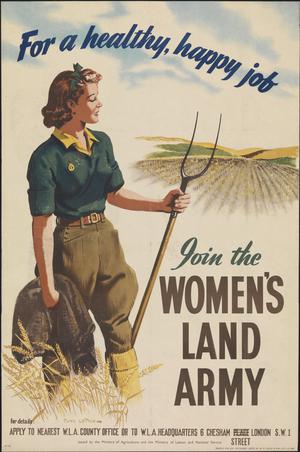
Women's Land Army poster. It depicts a young woman holding a pitchfork, set partly against an arable field. It says: For a healthy, happy job join the Women's Land Army.
Image: IWM (Art.IWM PST 6078 ⇗)

I have little doubt that Dorothy Tudge was one of the first Shropshire women to volunteer for the Women’s Land Army. Pinning down exactly when she became a ‘Land Girl’ is tricky though, given that the date is not shown on her WLA index card. Also, that card recorded Dorothy’s age as 29, which if accurate (hint: I’m pretty sure it wasn’t!) would mean that she joined in 1936, well before pre-WW2 recruitment had started.

There’s a little more to be gleaned from that index card. Dorothy’s WLA number was 3872, and her address was her family home: Whittingslow, Marshbrook, Shropshire. Her occupation when she joined was ‘Poultry worker’; her qualifications were “6 years practical experience in poultry work, specializing in laying battery work.” Evidently she had moved on from the dairy work she trained for in the mid-1920s.

Waters Upton

Dorothy expressed a preference for ‘mobile’ rather than local service, and she was duly placed on a farm at the other end of the county; her stint as a poultry worker at Waters Upton was most likely her first ‘posting.’ She was recorded on the National Identity Register on 30 September 1939 at The Grange, where she lived with 70-year-old widow Edith Moore and Edith’s daughter Eileen.

This type of accommodation for Land Girls ⇗ was known as private billets. Treatment of WLA ‘guests’ in such billets varied – I hope Dorothy’s experience was towards the ‘one of the family’ end of the scale. I suspect that her farming background would have counted very much in her favour.

While part of me wonders about the specifics of what her poultry work involved, another part of me wants to know how Dorothy spent her time when she was wasn’t working. Did she explore the local countryside? Take walks into the village to visit the shop or post letters, engaging in cheery exchanges of greetings or conversation along the way? Take part in evening social functions in the old school room (though these seem to have mainly taken the form of whist drives!)? She would almost certainly have accompanied Mrs Moore and her family to church services on Sundays.

I’ll write in more detail about the Moore family at a later date. Suffice to say for now that the 1934 Kelly’s Directory showed Edith’s husband Robert Edward Moore, farmer, at the Grange Farm; he died in 1935 and the 1937 Kelly’s Directory lists his son Robert Henry Moore in his stead. From the 1939 Register we can see that Edith continued living at The Grange, while her son Robert was based, with his wife and children, at The Grange Cottage (a little further down Catsbritch Lane). Robert was described in the Register as a ‘Mixed Farmer.’ I suspect that he did not have a poultry unit himself – I think it more likely that a tenant renting one of his cottages did, on a piece of land that went with the cottage.

There were three cottages, and nearly 190 acres of land, attached to The Grange Farm. All of this property was sold in September 1941 when the Moores moved on from Waters Upton. Perhaps that was when Dorothy departed too.
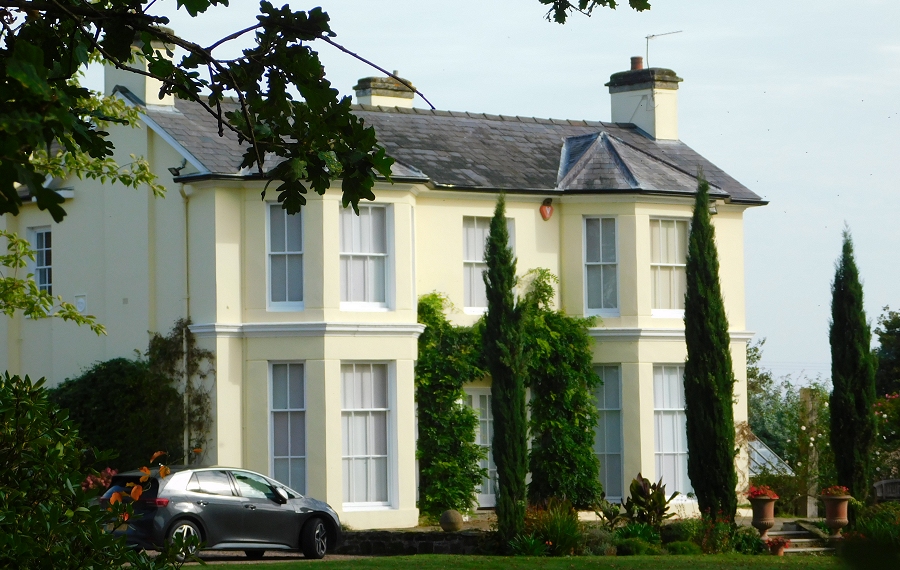
Photo of Waters Upton Grange. It is a two storey building with pale yellow walls. A car is parked outside, and there are a few ornamental trees in the garden.
Waters Upton Grange as it appears today. Photo by the author.

Much Wenlock, then Whittingslow once more

By July 1942, Dorothy was based on the other side of Wellington from Waters Upton, at Bradley Farm, just North of Much Wenlock. I know this because of a lengthy report in the Shrewsbury Chronicle of 23 October 1942 (page 8) headlined “Petrol Rationing Offences.” Miss Constance Jean Conroy was at the centre of this case, as the person who illegally received and used petrol coupons; she was fined £40 in respect of eight offences. Dorothy Tudge, one of the parties who had transferred coupons to Miss Conroy, was fined a grand total of £1!

Meanwhile, other members of the Tudge family were also involved in the war effort. Dorothy’s father William was a Lieutenant in the Whittingslow Home Guard Platoon (Shrewsbury Chronicle, Fri 21 May 1943, page 4). Her brother Herbert meanwhile had joined the RAF. His active service was sadly short-lived…

From All Round The Wrekin
News of Missing R.A.F. Officer
A few weeks ago Squadron-Leader A. J. [= H. J.] Tudge, son of Mr. W. B. Tudge, of Whittingslow, Marshbrook, was reported missing from an operational flight over Northern France. During the present week he has been officially reported to be a prisoner of war. The news has come as a great relief to squadron Leader Tudge’s relatives and friends in South Shropshire. […]
Shrewsbury Chronicle, 1 Aug 1941, page 4.

While confirmation that Herbert was a prisoner of war was good news considering the alternative, this meant that he spent most of the war in Stalag Luft III. The Shrewsbury Chronicle of 22 December 1944 (page 5) conveyed the news that Herbert’s parents had received a photo showed Herbert and other officers taking part in a play staged at the prison camp, “Blithe Spirit,” in which Herbert played a female part. A copy of the photo appeared in the paper’s edition of 12 January 1945 (page 6).

Notices in the Shropshire press towards the end of 1944 suggest that Dorothy Tudge was by then back on ‘home turf’ and had, along with her cousin Helen Maybery, turned her hand to rearing pigs. Those notices (including one on the front page of the Shrewsbury Chronicle of 13 Oct 1944) related to the annual sale of pedigree and commercial pigs at Shrewsbury, scheduled for 27 October. Those entering animals to the sale included “Misses Tudge and Maybery, Marshbrook (Large Blacks)”. After that, news on Dorothy’s whereabouts and activities is hard to find for a while. Let’s return to her obituary to pick up the latter part of her story.

Wadhurst
In 1953 she and her mother, who survives her, came to live in Wadhurst, where they made many friends. Miss Tudge was active member of the Women’s Institute, of which she was branch treasurer for several years, and was a supporter of many other local activities. She also worked for a number of charities and was a regular member of Tidebrook church […]
The Courier (Tunbridge Wells), 17 Dec 1976, page 22.
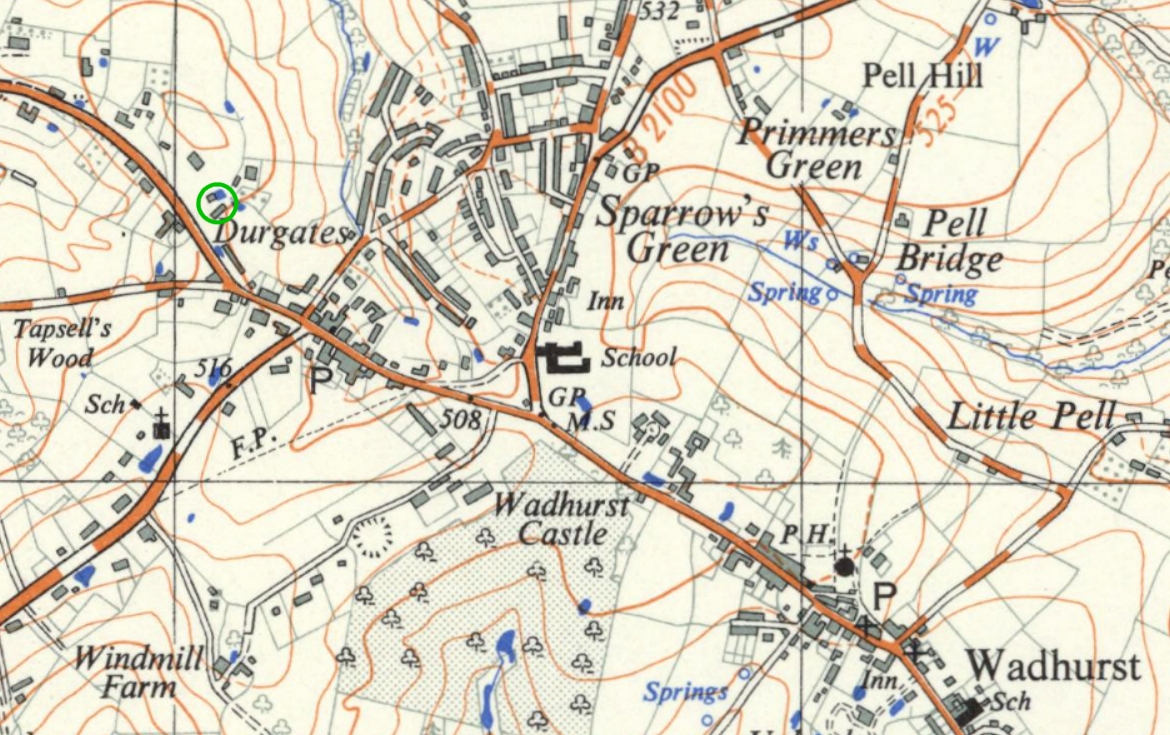
An extract from an Ordnance Survey map showing several settlements, with roads, streams, ponds, and some areas of woodland and wooded parkland. The main settlements are Sparrow's Green and Wadhurst; Primmers Green, Little Pell, Wadhurst Castle, Windmill Farm and Durgate are also shown.
Extract from a 1:25,000 scale Ordnance Survey Map covering Durgates, Sparrow’s Green, and Wadhurst. I have added a green circle to highlight Great Durgates Farm. Map reproduced with the permission of the National Library of Scotland ⇗ under a Creative Commons licence ⇗. Click on the image to view a larger version.

Dorothy’s father William Tudge went to Wadhurst too. He was included in the household at Great Durgates Farm on the 1955 electoral register for the East Grinstead Constituency. Sadly, he had died by the time the register came into force in February that year. The Wadhurst burial register shows that he was buried at the parish church on 10 December 1954.

Dorothy, as her obituary shows, became an active member of the local community she had joined. I have not found any information about the ‘other local activities’ she supported, or which charities she worked for. Her involvement with the local Women’s Institute, however, can be tracked – in part – via newspaper reports.

The earliest such report that I’ve discovered dates from June 1965, when Dorothy was one of three WI members who got full marks in the competition “My prettiest piece of china” (Kent & Sussex Courier, 4 June, page 16). Dorothy is recorded as Treasurer in 1969 (same title, 21 February, page 13), and in 1973 her efforts to collect information and photographs relating to the early years of Wadhurst WI were publicised (same title, 1 June, page 2, and Sussex Express, 5 October, page 20). The final snippet that I’ll share appeared in the Sussex Express, 30 December 1976, page 26:
WADHURST Women’s Institute held its Christmas fair at St George’s Hall. It opened on a sad note, when silence was observed in memory of Miss D. M. Tudge, a great worker for the branch for many years, who died recently. […].
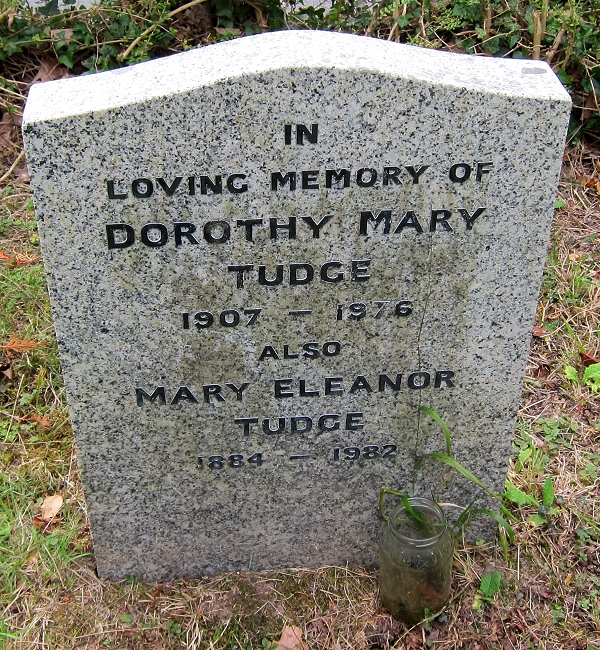
Photo of a simple grey gravestone. The inscription reads: In loving memory of Dorothy Mary Tudge, 1907 - 1976; Also Mary Eleanor Tudge, 1884 - 1982.
Photo from Find a Grave ⇗ – my grateful thanks to Rebecca Stewart for permission to use it here.

Dorothy’s obituary in The Courier concluded by noting that her funeral took place on 13 December 1976, at Tidewell. Her mother, after dying at the age of 97, joined her there in 1982.

A gravestone in Tidewell churchyard marks the spot where the former Land Girl of Waters Upton and her Mum lie together in eternal and well deserved rest.
Waters Upton in World War 2: Dorothy Tudge, Land Girl

Miss Dorothy Tudge, of Great Durgates, Wadhurst, died at the Kent and Sussex Hospital on Wednesday of last week. She was 69. Born into a farming family in Shropshire, Miss Tudge lived there for much of her early life and served through the Women’s Land Army throughout the war. […]
– The Courier (Tunbridge Wells), 17 Dec 1976, page 22.

Recently I looked again at one of the people recorded at Waters Upton when the National Identity Register was compiled at the end of September 1939. Dorothy M Judge, born 15 January 1907 – why could I find no other records for her? Looking again at an image of the register page, the answer dawned on me: I had misread Dorothy’s surname, the ‘J’ was in fact a ‘T’. Oops. (The transcribers working for Ancestry and Findmypast made the same mistake; I have submitted corrections to both.)

With Dorothy’s true name established I could finally find and link together records relating to her, and piece together what remains of her story. Where better to start than at . . . the end? Well, it struck me that Dorothy’s obituary, the ‘potted history’ of her life shared by way of remembrance just after her death, provides a framework upon which a more detailed account could be constructed – and can now be shared.

Stepaside

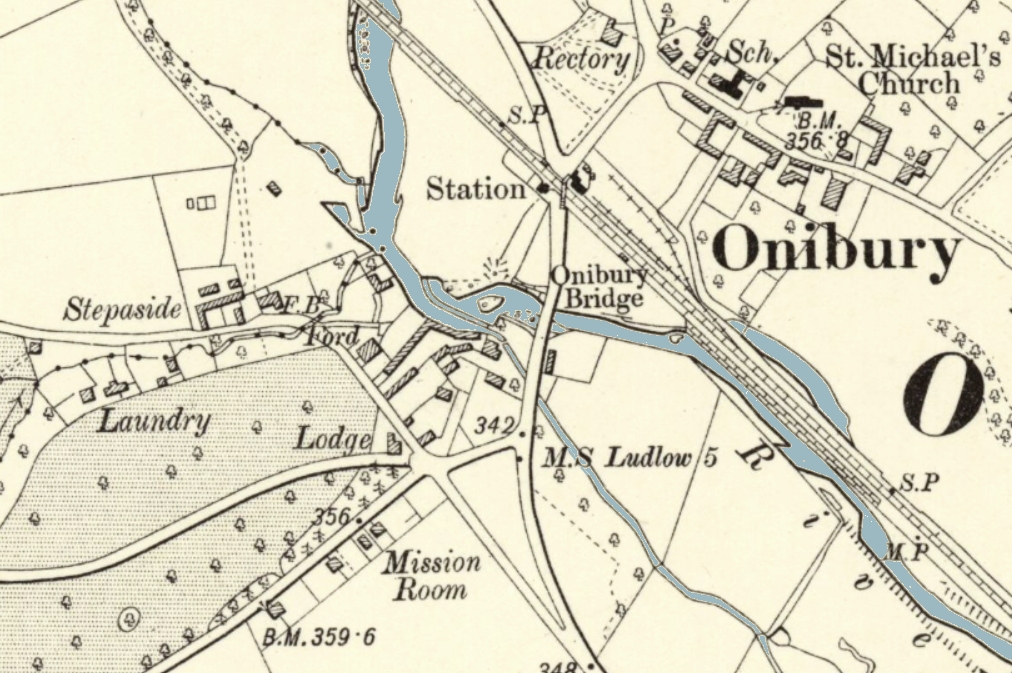
As we have seen, Dorothy Mary Tudge was born in January 1907, in Shropshire. I think the exact location was most likely the place where she and her family were enumerated on the 1911 census: Stepaside. This lies on the edge of the parish of Stokesay, then part of the Ludlow Registration District ⇗ in which Dorothy’s birth was duly registered ⇗. It also lies right next to the village and parish of Onibury.

Extract from a large scale Ordnance Survey map. In the top right corner is the small village of Onibury. A railway line runns across the map from near the bottom right corner to the top, just left of centre. A river follows a similar but more winding course, and is crossed by the railway in two places. West of the river, in otherwise open countryside, are scattered buildings including a farm named Stepaside.
The village of Onibury and nearby Stepaside, on a large scale Ordnance Survey map. Extract reproduced with the permission of the National Library of Scotland ⇗ under a Creative Commons licence ⇗. Click on the image to view a larger version.

The household at Stepaside recorded on the 1911 census was headed by Dorothy’s father William Bradford Tudge, aged 29, a farmer born at Leominster in the neighbouring county of Herefordshire. William’s wife was Mary Eleanor, 26, a native of nearby Wistanstow. She had been married to William for five years (their wedding took place at Stokesay on 14 March 1906 ⇗) and two children had been born of their union. Dorothy, then 4, we know about of course. The other child was a very new addition to the family: Herbert John Charles Tudge, age “under one month.” Enumerated with the Tudges were a maternity nurse, a ‘lady help,’ a general domestic servant, and a cowman.

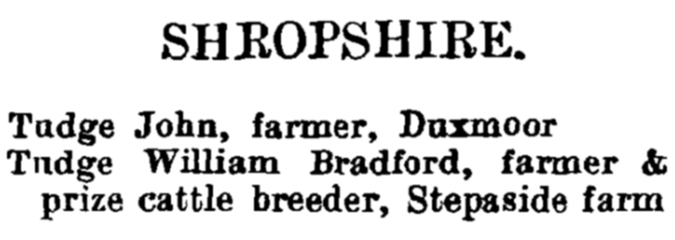
A small extract from a 1913 Kelly's Directory. It reads: Shropshire. Tudge John, farmer, Duxmoor. Tudge William Bradford, farmer and prize cattle breeder, Stepaside farm.

Stepaside Farm was still this family’s home in 1913, when William Bradford Tudge, “farmer & prize cattle breeder,” was listed in that year’s Kelly’s Directory of Shropshire ⇗ as part of the entry for Onibury (the snippet from the directory, on the University of Leicester website ⇗, is used under a Creative Commons licence ⇗). His details appeared just below those of his father John, who farmed at Duxmoor. These listings were repeated in the 1917 directory (viewed at Ancestry: Herefordshire and Shropshire Directories, 1917).

By 1921, William Bradford Tudge had taken his family to live with his parents John (71) and Helen (68) at ‘Duxmore’. William’s occupation was given as “Assisting Father.” Dorothy, then aged 14, was not with her family however. She was instead boarding elsewhere in the county.

Wellington

Hiatt Ladies’ College in Wellington was Dorothy Tudge’s home away from home, presumably for several years. This institution was established in 1847 ⇗ by Mrs Elizabeth Hiatt, née Keay (whose Crudgington-born father John, incidentally, was baptised in November 1801 at Waters Upton). Allan Frost, author of a book on the history the college, is quoted by the Shropshire Star in 2019 ⇗ as saying that it was “the first college intended purely for the education of young ladies in the country.”

It appears that the college did an excellent job too. A list of students with top educational attainments published in The Educational Times of 1 February 1906 (pages 91 ⇗ and 92) includes five names from Elizabeth Hiatt’s establishment, and there are other examples to be found.

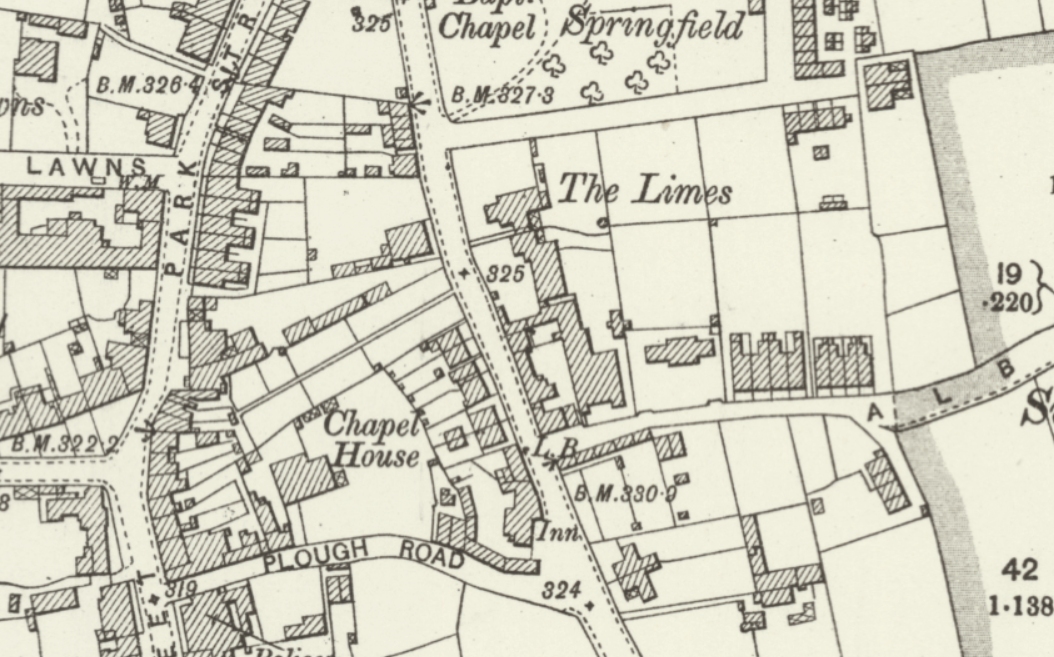
An extract from a large scale Ordnance Survey map showing streets and buildings in the Shropshire town of Wellington. Road names visible are Plough Road and Park Street. Named houses include Springfield, The Limes, and Chapel House.
King Street, Wellington (running North-South down the centre of this map extract) as shown by large-scale Ordnance Survey mapping. Mrs Hiatt used to live at The Limes; the college buildings lay immediately to the South, down to the junction with Albert Road. Map reproduced with the permission of the National Library of Scotland ⇗ under a Creative Commons licence ⇗. Click on the image to view a larger version.

The census of 1921 shows that in addition to the head, May Margaret Daniels, there were 11 other mistresses, teaching English, French, science, history, music, art, and gymnastics. In addition the college had a matron, an assistant matron, and a nurse. Dorothy Tudge was one of 55 pupils, aged from 10 to 17, most of whom came from Shropshire and the neighbouring counties of Cheshire, Staffordshire and Warwickshire.

I would love to know what Dorothy’s educational accomplishments were during her time at the college, not to mention her other experiences and how she adjusted to a very different way of life after her childhood on a farm. Who were her friends? What did they get up to when not in class? Did they break the rules, and if so, were they caught?

Cwm Head, Radbrook, and Whittingslow

As for the length of time Dorothy attended Hiatt Ladies’ College, my guess is that she was there from around 1917 to about 1923. A report in the Wellington Journal of 19 January 1924 (page 5) then places her back in the South of Shropshire, and pursuing an interest in dairy work. The report, covering a meeting of the Salop Agricultural Committee, noted that:

Dairy scholarships of the value of £15 each tenable for ten weeks at the Shropshire Technical School for Girls, Radbrook, near Shrewsbury, had been awarded to the following:— […] Marshbrook Butter-making Class— […] Miss Dorothy M. Tudge, Cwm Head House, Church Streeton; […]
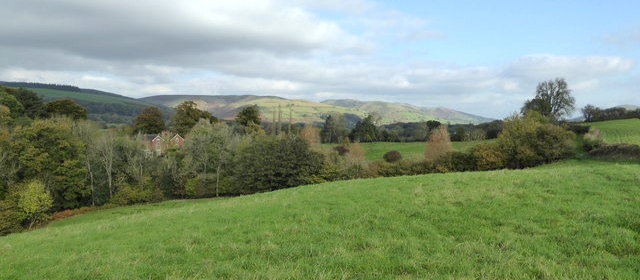
A photo of farmland in South Shropshire. In the foreground is a grassy field, on the far side of which is a hedgerow running from right to left, where there is a larger cluster of trees. Beyond are one or two more grassy fields, hedgerows, and trees, and in the distance there are some low hills. A pale blue sky above is partly covered by cloud.
View from above Cwm Head Farm. Photo © Jeremy Bolwell, taken from Geograph ⇗ and modified, used, and made available for re-use under a Creative Commons licence ⇗.

Did Dorothy delay taking up her ten week scholarship? Or did she stay at Radbrook for a lot longer than ten weeks? Some 18 months after the above report, the same newspaper carried (on 25 July 1925, page 5) details of the distribution of prizes at Radbrook Technical School. Amongst those presented with certificates and prizes by Lady Harlech was Miss D Tudge, who received a school certificate for dairy work – first class.

Over nearly all of the following 15 years, Dorothy seems to have ‘flown under the radar’ as far as the press was concerned. In complete contrast, her father and her maternal aunt, Mrs (Katie) Maybery, were regularly in the local newspapers thanks to their prize-winning herd of dairy Shorthorn cattle. From earlier examples of this media coverage (including the Shrewsbury Chronicle, 8 Apr 1932, page 8) it appears that the herd was established at Cwm Head around 1926, before the operation moved (in about 1929 I believe) to nearby Whittingslow Farm, Marshbrook. Though she spent time away from her family, these farms – especially Whittingslow – were home.

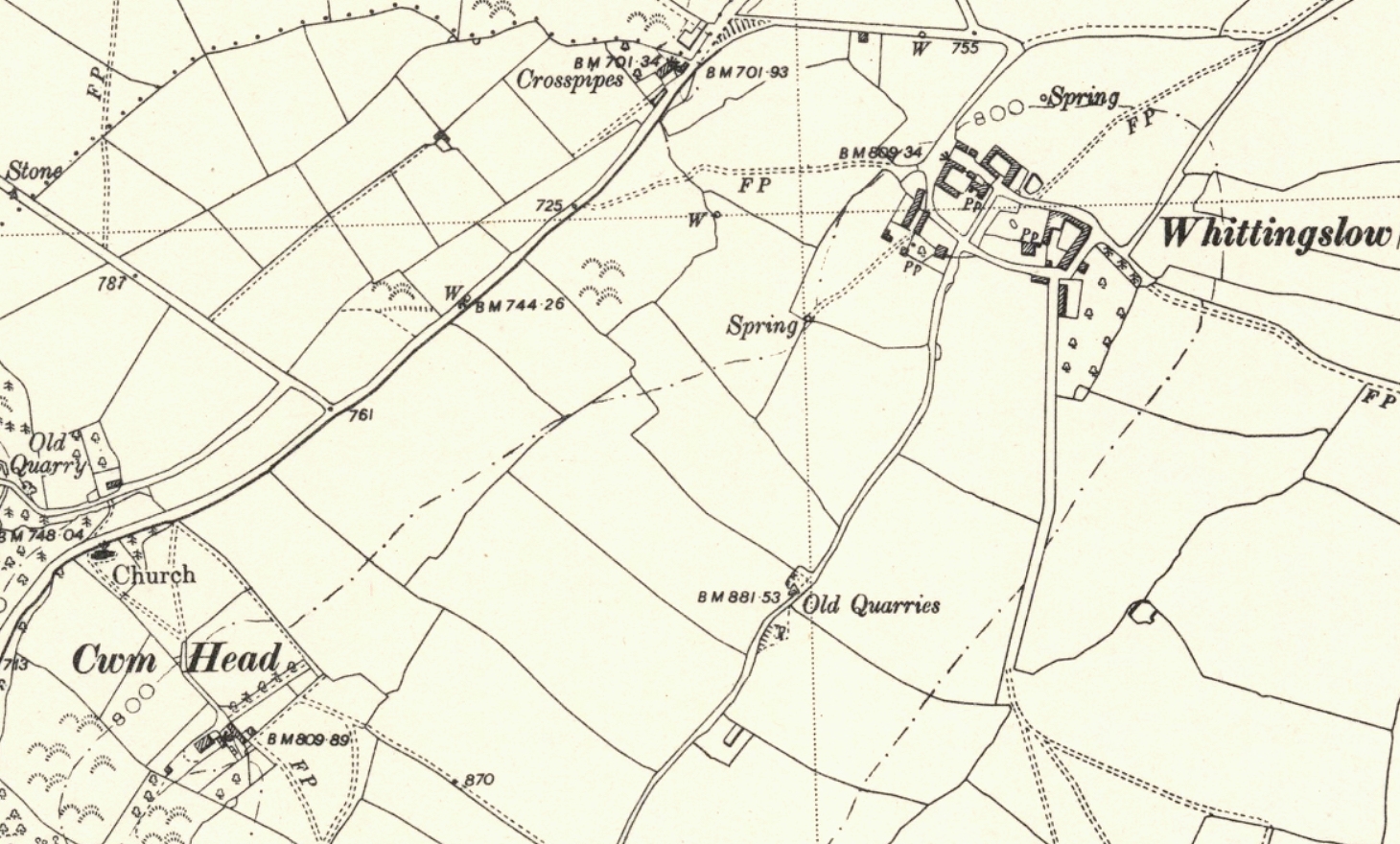
Extract from a large-scale Ordnance Survey map. Mostly it shows open fields and country lanes, but there is also the small hamlet of Whittingslow near the top right corner; a church and a farm named Cwm Head in the bottom left corner.
Cwm Head and Whittingslow, as shown on large scale Ordnance Survey mapping. Map extract reproduced with the permission of the National Library of Scotland ⇗ under a Creative Commons licence ⇗. Click on the image to view a larger version.

Surrey, and back to Shropshire

Dorothy spent at least part of this time living – and presumably working – in Surrey. Electoral registers record her there in 1930 and 1931 living at 75 Langley Park Road, Sutton, with Ada and Caroline Absale (sadly, she probably didn’t make jokes about them descending vertical rock faces or the sides of tall buildings with the aid of ropes). She also appeared in a 1933 electoral register, at Chalklands, Woodland Road, Little Bookham, with Thomas and Edith Weaver.

Those few occasions when Dorothy’s name did appear in the papers during this period were sad ones – the funerals of her grandparents. The last of these events was the interment of Dorothy’s paternal grandmother Helen Tudge, who died in on the 4th, and was buried on the 8th, of February 1937. Reporting on Helen’s death and funeral, the Shrewsbury Chronicle (12 Feb 1937, page 16) noted that she was a member of the local Women’s Institute and the Women’s Conservative Association, as well being a “fervent church woman”. At least one of those things would rub off on Dorothy.

Two years later, Britain was at war, and members of the Tudge family stepped up to play their parts. For Dorothy, this would include working at Waters Upton.

Part 2 ⇒

Waters Upton 1921: a post-war parish (part 2)

Part 1

Edgar Percy Davies now retraced his steps back along the village road, heading towards and then beyond the church. Soon he was passing the White House, his destination being the next house along.


Number 11 was occupied by newcomers to the village, the Rowberry family. Thomas Henry Rowberry may well have served during the war – there are two sets of medal award records (one from the Machine Gun Corps and one from King’s Royal Rifle Corps), either of which might be his, but no pension index/ledger cards or surviving service record to confirm this.


Beyond number 11 lay the semi-detached residences numbers 10 and 9, headed respectively by (post-war incomers?) Joseph Ralphs and his son Frank Ralphs. I am not aware of any wartime military service being undertaken by members of this family, but it would not surprise me if Frank or one (or more) of his brothers had served.


Why did the enumerator cross the road? To collect the household schedules on the other side. Number 31 (Clematis Cottage) was the home of Arthur Ball and his sister Elizabeth Emma, neither of whom had connections with military service that I know of. The same cannot be said of the next house however.


Photo showing two names on a brass memorial plaque listing men of Waters Upton parish who died while serving in the Great War: Private W. James, K. Liverpool Regt., Private J. H. Jones, Royal Welsh Fusiliers.

At number 32 lived widower Charles George, along with two of his daughters, both war widows, and their children. Jane’s husband William James, a native of Waters Upton, I have already mentioned (his mother lived at number 23 Waters Upton). Kate’s husband John Herbert Jones was a Liverpudlian, who was killed in action while fighting with the Royal Welsh Fusiliers in France. A few years after this census was taken Jane and Kate would both emigrate, with their children, to start new lives New Zealand.


On went enumerator Davies to numbers 33 (William and Matthews) and 34 (William Edward Morgan and family), and then, after crossing road, to number 8. The occupant of this house, Alfred Ridgway, I have already mentioned (his first cousin Charles, the blacksmith, lived at number 15). Alfred, a carpenter and wheelwright, had two sons who, despite having no medals to show for it, had ‘done their bit’ during the war: William George Ridgway (Devonshire Regiment and Labour Corps) and Alfred John Ridgway (Royal Garrison Artillery).


Back across the road to Malt House Farm and, just to the North of that, Lower House Farm, both occupied by (unrelated, as far as I know) Powell families. These farming families had no wartime military connections that I know of, but one of the servants at Lower House Farm did: Thomas Hall (who would marry his employer’s sister in 1922) served with the Royal Army Veterinary Corps. His brother, Pryce Hall, also played his part in the Great War. Having emigrated to Australia in 1912, Pryce served with the Australian Imperial Force from 1915.


On leaving Lower House Edgar Davies continued along the road, which now left the village of Waters Upton, and headed towards Harebutt Bank. He called next on number 39, which was occupied by the Cartwright family. John, the head of the household, had no military record but his younger brother James did. James Cartwright enlisted with the Monmouth Regiment, then transferred to the South Wales Borderers after entering France with the British Expeditionary Force. He was discharged after receiving a gunshot wound to the left thigh in 1917, and died in 1919.

Photo of a Poppy flower, with large, scarlet petals and dark centre.
Poppy. Public domain (CC0) image by Travel Photographer, from negativespace.co

Edgar had already visited one home where relatives of John Evans lived (number 25), and now he called on another, number 40, where John’s uncle and aunt Samuel and Martha Evans lived. After that, he went to Harebutts Farm (number 38), home of the Casewell family. The Casewells’ servant, agricultural worker Alan Furnivall, had joined the Royal Flying Corps in 1917 and transferred to the RAF on its formation in 1918. Alan worked on aircraft rather than flying them, and he was discharged in 1920 with a record featuring a long list of civil convictions and prison sentences.


As he began to head back towards the Waters Upton village, Edgar the enumerator collected a final schedule from a Harebutt Bank household (The Harebutts, number 37, home of John Stanley Morgan and family). Then he continued along the road, past Lower House Farm, and turned left onto Catsbritch Lane.


On the right as he entered the lane was a dwelling divided into three, numbers 7, 6 and 5. These households were occupied by Elizabeth Matthews (at number 7), Frank and Annie Battman (at number 6), and William Beech with his wife Elizabeth and son Thomas (at number 5). Thomas Beech had been a Private with the Shropshire Yeomanry and then a Driver with Royal Field Artillery during the Great War, while his brother Henry Eddowes Beech (now living elsewhere) had emulated the latter part of his service.


Just a little further along Catsbritch Lane and on the same side of the road was a terrace of four houses where Waters Upton’s street numbers began: number 4 (Charles James and family), number 3 (Ernest Edward Austin and family), number 2 (Joshua Cartwright and family), and number 1 (Thomas Bennett and family). All but one of these (number 3) houses had connections with military service in the Great War. Of those three, two have already been mentioned: Charles James at number 4 (a brother of Thomas James at number 23, of John James and the late Williams James, and a brother-in-law of William’s widow Jane James at number 32), and Thomas Bennett at number 1 (a brother of Alfred, George and Charles Edward Bennett at number 17).

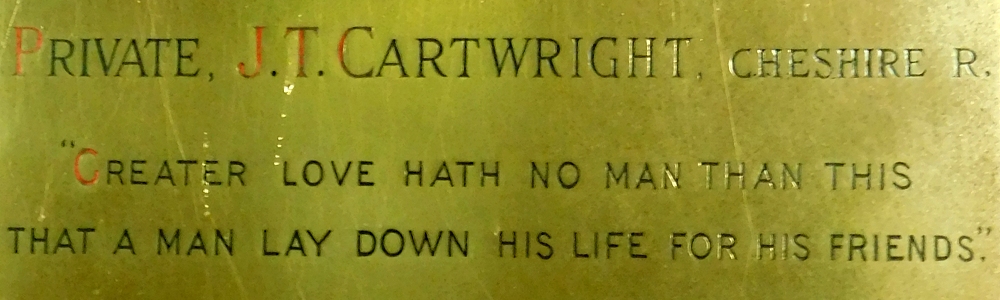
That leaves number 2 Waters Upton, the last household Edgar Davies would visit in which a family member had been lost during the war: Joshua and Priscilla Cartwright’s son John Thomas Cartwright was killed in action while fighting with the Cheshire Regiment during the Second Battle of the Somme on 27 March 1918.

Photo showing the last name on a brass memorial plaque listing men of Waters Upton parish who died while serving in the Great War: Private J. T. Cartwright, Cheshire R. Beneath that name is inscribed: "Greater love hath no man than this, that a man lay down his life for his friends."

A little further along Catsbritch Lane, and set back from it on the other side, was The Grange Farm (number 41?). The head of this household was Ferdinand Heyne, a naturalised British Subject born in Germany. Ferdinand was a pork butcher in Shrewsbury from at least 1901 until 1913 (when he listed in that year’s Kelly’s Directory) and possibly a little later, but not in 1917. Had anti-German sentiment during the war pushed him out of the town and into the countryside?


The next house at which Edgar Davies stopped to collect a census schedule was number 48. I must admit that I’m not entirely clear about the numbering along Catsbritch Lane, but I suspect that number 48 was the cottage now known as Manor Lodge, which sits beside one of the entrances to Waters Upton Manor (which might be number 49). It was occupied by James Evans, his wife, and their children, one of whom was John Evans. John had enlisted with the RAF in July 1918, just 11 days after his 18th birthday and a little over three months before the war ended.


At the Manor itself – not that it was named (or numbered) on the schedule – was Arthur Lea Juckes. Arthur had a little military service to his name, in the form of a brief spell as a Lieutenant with the Surma Valley Light Horse in India, but that was in 1898. During the Great War he took on another role, chairing military tribunals at Wellington – and ruthlessly enforcing the rules under which men could be conscripted.


As he got closer to The Terrill, the end of our enumerator’s tour of Waters Upton was nearly over. He visited number 42 (farmer Richard Allen and his housekeeper – was this Melverley House or Linden Lea?) and then number 44 (Thomas Edward Harris and family; I’m guessing that number 43 – Grange Cottage? – was unoccupied).


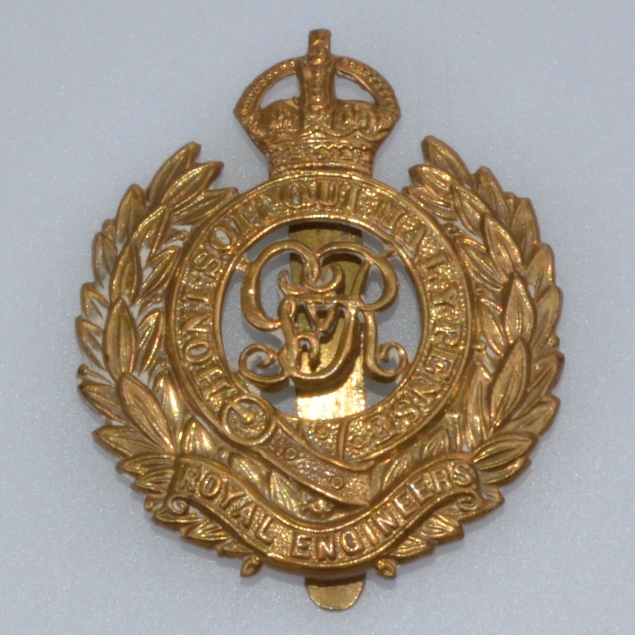
Photo of a Royal Engineers cap badge. It is bronze in colour. In the centre are the ornate initials G. R. (the King), surrounded by a belt with a barely legible inscription. Above that is a crown. A wreath extends from the bottom (where a banner bears the words Royal Engineers) and up both sides.
Royal Engineers cap badge. Public domain image from getarchive.net

Edgar Davies’ penultimate house call was to number 45, The Terrill Farm, occupied by septuagenarian farmer William Woolley, his wife Emma, two of their daughters, and three visiting relatives. Four of William’s sons had participated in the Great War: George Woolley (Yorkshire Regiment and Labour Corps), Robert Woolley (Canadian Royal Engineers), Frederick Woolley (Royal Engineers), and William Woolley (Royal Field Artillery).


Finally came number 46, a cottage just North of the Terrill Farm (number 47, a little further to the North, was most likely unoccupied). This was the home of widow Sarah Cartwright and two of her grandsons, one of whom was Geoffrey Henry Cartwright. It appears that Geoffrey first enlisted with the Black Watch (possibly before the war), then fought with the Worcester Regiment (when he was wounded at Gallipoli), and went on to serve with the Oxfordshire and Buckinghamshire Regiment and finally, post-war, with the King’s Shropshire Light Infantry (Territorial Army). He was the third resident of Waters Upton parish to declare himself as being out of work – all three were former servicemen.


Life went on in Waters Upton after the First World War, as it did elsewhere, but without those who paid the ultimate price to help deliver victory over the Central Powers, and with many who came home bearing physical injuries, mental scars, memories of battle which would never fade. Directly and indirectly, the lives of many of Waters Upton’s inhabitants were forever changed. More than a century later, we remember those who died, those who returned, and the families and communities they belonged to.


Waters Upton 1921: a post-war parish (part 1)

Taken two and a half years after the end of the Great War, the census of 1921 provides a picture of what life was like in that conflict’s aftermath. In this look at the parish of Waters Upton at the point when that census was taken, my main focus is on the households which were impacted by military service.

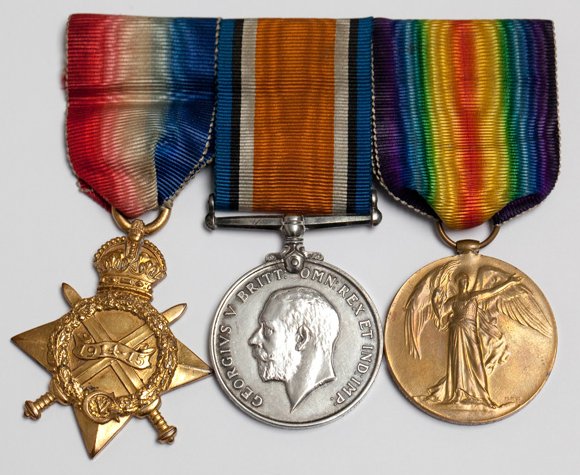
Photo of the three most commonly awarded medals of the First World War. From left to right: A 1914-15 Star (a four-pointed star of bright bronze, with crossed swords, surmounted with a crown; the ribbon has bands of red, white, and finally blue)); a British War Medal (a silver disc bearing an effigy of the head of King George V; the ribbon has a wide central orange band, on each side of which are narrow bands of white, then black, and finally blue); a UK Victory medal (a bronze disc, with the winged, full-length, full-front, figure of 'Victory,' or 'Victoria'; the ribbon has a central stripe of red, on each side of which are further stripes of yellow, then green, then blue, and finally purple).
Pip, Squeak and Wilfred. Photo credit: Europeana 1914-1918 project photo, taken from Wikimedia Commons ⇗ and adapted, used, and made available for reuse under a Creative Commons licence ⇗.

47 households in the parish of Waters Upton returned census schedules to the enumerator on the morning of Monday, 20 June 1921. In 15 of those households (a fraction under 32%) there were one or more occupants who had served with the armed forces during the Great War. Three of those households also had one or more occupants with immediate family members, by then dead or living elsewhere, who had served.

In another 13 (or 27.7%) of Waters Upton’s households which did not fall into the above category, there were one or more occupants with immediate family members (husband / son / father), by then dead or living elsewhere, who had served.

Taking these two categories together, at least 59.6% of Waters Upton’s households (28 out of 47) had occupants with direct or close connections to wartime military service – including five with immediate family members (seven men in total) who were killed during the war or died shortly afterwards. “At least”? Well, there was one more household which included someone who I suspect was an ex-serviceman. There may also have been others amongst those who came to village after the war. And it is quite possible that other households included occupants with immediate family members whose service I am not aware of. Further information boosting the total (and percentage) above may yet come my way.

Of the remaining 19 Waters Upton households, three had one or more occupants with more distant family members who served: a nephew, a first cousin, and a first cousin once removed. Another had an occupant who contributed to the war through involvement in military recruitment.

Enough of the numbers. Let’s meet the people and the families of Waters Upton whose lives were never quite the same after the first world war – and let’s do that by following the enumerator for the parish, Edgar Percy Davies, as he visited the homes of Waters Upton and collected the householders’ census schedules. This will provide us with brief introductions to the families of the parish in 1921, and to most of those individuals from the parish who served during the war. I hope to expand upon these introductions in future posts.


Edgar first called on the pubs and houses situated alongside the Wellington to Market Drayton road, starting with the southernmost, the Lion Inn (number 16 Waters Upton). Here, Lucy Price is our person of interest. She had two sons by her first husband, both born at Waters Upton, who had served during the war: Henry Wylde (King’s Liverpool Regiment and Labour Corps) and Albert Wylde (Royal Navy).


Next was number 23, home of widow Anne James and her adult children Thomas and Lizzie. Three of Anne’s sons had enlisted: John James (Royal Field Artillery), William James (The King’s Liverpool Regiment), and the aforementioned Thomas James (Shropshire Yeomanry). Sadly, William died on 17 November 1917 from wounds received while serving in France. Edgar Davies would later call at William’s former home, number 32, where his widow and sister-in-law were living; he would also visit the home of another James brother, Charles, at number 4.


Heading briefly up the main road running through the village took Edgar to number 22, another household with an ex-serviceman: John Picken was a Sapper with the Royal Engineers during the Great War.


Returning to the Wellington to Market Drayton road and crossing it took our enumerator to number 17, a house occupied by three former soldiers. Alfred Bennett had served with the King’s Shropshire Light Infantry, while his brothers George Bennett and Charles Edward Bennett had both been members of the Royal Army Service Corps. Edgar would later visit their brother Thomas Bennett (who had not served) at number 1 Waters Upton.

Photo showing three names on a brass plaque commemorating men from Waters Upton who served in and survived the Great War: Private Charles E. Bennett, R.A.S.C. M.T; Private William Bennett, R.A.S.C. M.T; Private Alfred Bennett, 8th K.S.L.I.

Back across the road to the Austin family at number 21 and then to number 24 next door, the abode of former Private (with the Oxfordshire and Buckinghamshire Light Infantry) Thomas Cartwright.


Next was number 20, also known as Sutherland Cottage. This was the home of Samuel and Mary Anne Woolley, two of their sons, and their only surviving daughter. Three sons were no longer at home, two of whom had been military men during the war: Robert Ernest Woolley was demobbed at a Sergeant in the Middlesex Regiment; Hubert Victor Woolley was still with Military Foot Police (and was enumerated at Cologne in Germany with the British Army of the Rhine).


After one final trip across the Wellington to Market Drayton road (to the Beeches, number 18) and back, Edgar Davies visited the last house in this part of Waters Upton village, the Swan Inn (number 19). Minnie Harper Owen was the innkeeper here, with her sister Emma Louisa Pierce providing domestic help. Emma was a widow, but not (as far as I can tell) a war widow. The sisters did have a connection to military service in the recent war however: their brother Charles Gordon Owen had been a Sergeant in the Royal Horse Artillery.


After he left the Swan, enumerator Davies headed up River Lane to the main road through the village, where he turned left and arrived at the Rectory (number 27). William Astbury Meakin, the rector, had not taken part in the war but his son, the Rev George Astbury Meakin, had briefly served with the Royal Army Medical Corps.


The next port of call was The Hall (number 28), home of Ernest James Fisk, who had ended the Great War as a Major in the Royal Field Artillery.


Photo showing two names on a brass plaque commemorating men from Waters Upton who died while serving in the Great War: Lieut. G. H. Davies, 3rd K. Shropshire L. I; 2nd Lieut. W. L. Davies, 7th K. Shrops. L. I.

Crossing the road and walking past the parish church took Edgar Davies to the White House (number 12). Of all the households in Waters Upton, I think it is fair to say that this one had contributed most to the war. This was the home of Susan Anslow Davies, widow of rector John Bayley Davies. Five of this couple’s sons had gone to war: Arthur John Davies (Royal Navy), Walter Llewelyn Davies (King’s Shropshire Light Infantry), Reginald Wynyard Davies (Royal Army Medical Corps), George Herbert Davies (King’s Shropshire Light Infantry), and Andrew Taylor Davies (Gurkha Rifles).

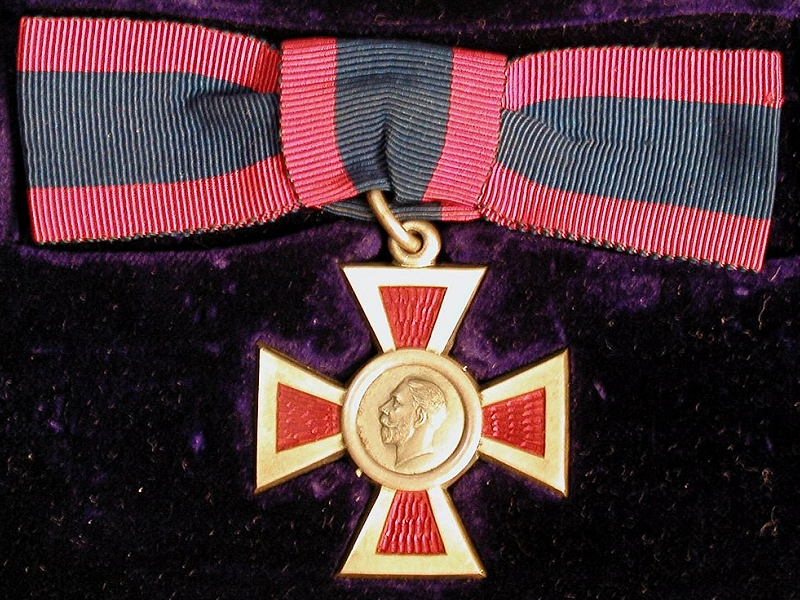
Two of the Davies brothers did not come home. George Herbert Davies was killed in action at Hooge on 9 (some sources say 10) August 1915; Walter Llewelyn Davies died of his wounds at the Somme on 15 July 1916. Annie May Davies, living at home with her mother, had served during the war too – she was awarded the Royal Red Cross Second Class in 1918 “in recognition of [her] valuable services with the British Forces in Mesopotamia” with Queen Alexandra’s Imperial Military Nursing Service Reserve.

Photo of a badge of the Royal Red Cross, Second Class. The badge is in the shape of a golden cross, with a circular medallion at its centre, bearing an effigy of the King's head. The ribbon, in the form of a bow, is dark blue (that colour appears black in this image) with crimson edge stripes.
Royal Red Cross Second Class. Image credit Auckland Museum, licence CC BY.

Crossing the road again took our enumerator to an abode which was not numbered on the schedule; it appears to have been in the vicinity of The Hall and might have been what is now either 29a or Groom’s Cottage. Another Woolley family lived here: John, Fanny, and their son George Woolley, a “Discharged Soldier” who had been working for Lady Mary Herbert but was now out of work. During the war George had been a Gunner with the Royal Field Artillery. His brother Thomas Woolley had served too, with the Army Service Corps; in 1915 he gave his father John’s address as “Oldhall Cottages” in Waters Upton.


The next residence visited was number 29, where Joseph Shakeshaft had one of the more distant connections with wartime military service: his first cousin Joseph Baxter Shakeshaft, born at Waters Upton in 1885, had toiled with the Labour Corps.


The Crescent (Crescent House, number 30) was Edgar’s next stop. Frederick Walter Godfrey Starling was probably a post-war resident of Waters Upton; he brought with him memories of being a Private with the Army Service Corps.


After he left The Crescent, enumerator Davies doubled back to visit the houses in the vicinity of the smithy – he could have saved himself some legwork by turning right when he entered the main street from River Lane. The village blacksmith was the first person called upon on this little detour: Charles John Ridgway lived at number 15, next to his workplace. Charles was another resident whose connections with those who had served during the war was more distant. That connection was with two of his first cousins once removed. They were sons of Charles’ first cousin Alfred Ridgway at number 8 Waters Upton, so I will mention them later.


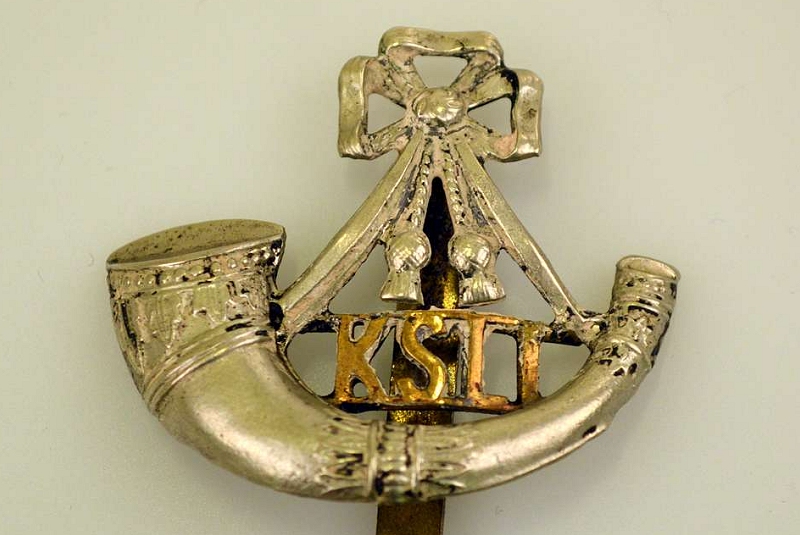
Photo of a King’s Shropshire Light Infantry cap badge (or, as my caption for the image original said, cap badger. The Imperial war Museum describes this as a "Bi-metal badge in the form of a stringed bugle-horn (in white metal) within the cords of which are, the brass letters 'KSLI' on bars."
King’s Shropshire Light Infantry cap badge. Public domain image from getarchive.net

Across the road to number 25, home of James Buckley and his family. James had enlisted with the King’s Shropshire Light Infantry in 1910 so he was already in the Army when the Great War began. His brother-in-law John Evans had also served – Edgar Davies would call at John’s home, and meet another of John’s relatives, later.


Continuing back along the village road and crossing it once more to our enumerator to numbers 14 and 13, both inhabited by former soldiers. At the first house was John Halford Ferrington, formerly of the Royal Engineers, and his family; next door at number 13 lived Hannah Cartwright with her niece Gertrude Tudor and nephew Ernest Samuel Tudor. Ernest was another ex-military man (Cheshire Regiment and Labour Corps) who was now unemployed.

The last of this group of houses near the smithy, on the other side of the road, was number 26, the home of war widow Edith Mabel Parry and her three children. Edith’s late husband Edward Lewis Parry, formerly Waters Upton’s grocer and sub-postmaster, was killed in action in Northern France on 30 September 1918 while fighting with the Lancashire Fusiliers.

Photo showing two names on a brass plaque commemorating men from Waters Upton who died while serving in the Great War: Private E. Parry, Lancashire Fus.

Part 2