Waters Upton’s first amateur entertainments (Part 3)

Part 2

What an interesting evening this is turning out to be – I must travel back to the Waters Upton area in the late 1860s more often! ‘Local talent’ performing along with accomplished amateur vocalists and musicians from a little further afield is proving to be a great combination. Speaking of those who have come from beyond the immediate locality, here comes Mr Palmer again.

Duet, ‘Come where my love lies dreaming,’ Mr Palmer and friend.
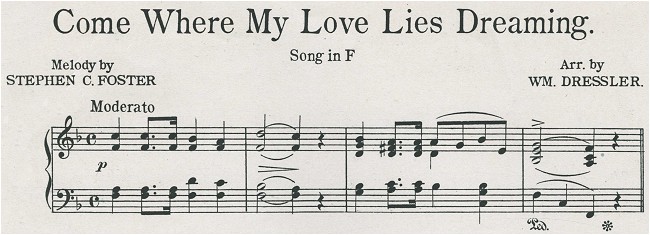
There are murmurs of approval in the schoolroom at the sight of Moses Palmer preparing to deliver his third song this evening. Rightly so, as Mr Palmer’s musical talents are well known in north-east Shropshire – and not just as a singer.

Local papers show that Moses Palmer was conductor of the Oakengates Choral Society from the mid-1850s (Newport & Market Drayton Advertiser, 1 June 1855; Shrewsbury Chronicle, 2 November 1855), provided guidance to St George’s Choral Society when it was formed in 1859 (Wellington Journal, 7 May 1859; Eddowes’s Shrewsbury Journal, 11 May 1859), and played a leading part in the formation of the Coalpit Bank Choral Society the following year (Shrewsbury Chronicle, 9 March 1860).

Several of the concerts put on by those choral societies with Moses Palmer’s involvement were for charitable purposes. I think it’s quite likely that Mr Palmer is here tonight because the man for whom money is being raised by this event, John Preece, lives in the same part of Shropshire.

A hush is now descending, and the performance is beginning; here are the words (from The Guiding Star Songster, published a couple of years ago in 1865) if you’d like to follow along. If you haven’t jumped back in time with me to witness this live performance, I’ve also found an audio recording of a much later rendition, which although delivered by different artists (and a larger number of them) will give you a good idea of what we’re listening to, here in 1867.

Come where my love lies dreaming,
Dreaming the happy hours away,
In visions bright redeeming
The fleeting joys of day;
Dreaming the happy hours,
Dreaming the happy hours away,
Come where my love lies dreaming,
Is sweetly dreaming the happy hours away.

Come where my love lies dreaming,
Is sweetly dreaming, her beauty beaming;
Come where my love lies dreaming,
Is sweetly dreaming the happy hours away.
Come with a lute, come with a lay,
My own love is sweetly dreaming, her beauty beaming;
Come where my love lies dreaming,
Is sweetly dreaming the happy hours away.

Soft is her slumber, thoughts bright and free
Dance through her dreams like gushing melody;
Light is her young heart, light may it be,
Come where my love lies dreaming,
Dreaming the happy hours,
Dreaming the happy hours away;
Come where my love lies dreaming,
Is sweetly dreaming the happy hours away.

Intermission…

Time travel does not always go smoothly, unfortunately –sometimes it’s as if we lose our internet connection during an online presentation and then we’re ‘back in the room’. I’m not really au fait with the mechanics behind at all, but it might be a problem with the flux capacitor, or a random burst of chroniton particles causing a kind of ‘time burp’, or maybe even eddies in the space-time continuum ⇗. Whatever the cause, in being whipped out of time and then plonked back exactly where, but not exactly when we were, we have missed four performances.

The newspaper report of this evening’s event gives us some idea of what happened in our absence, but some elements remain a mystery. “Beatrice (pianoforte and organ flutina), Miss Titley and Mr T. Hughes.” What was performed here? Quite possibly it was an air from the tragic opera Beatrice di Tenda. Mr T Hughes was presumably not the Mr Hughes we have already heard from (and who performed the next number). Miss Titley may have been one of Waters Upton’s own, Mary Jane Titley, daughter of Thomas Titley, a butcher, and his wife Elizabeth, née Icke. If so she was, like Miss Shakeshaft who we met earlier, another young performer.
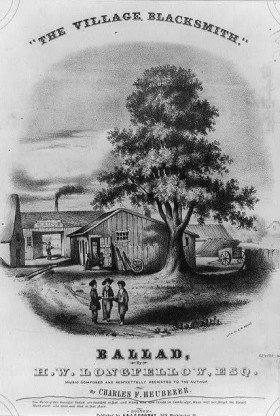
Song, ‘The Village Blacksmith,’ Mr. Hughes.” What a shame we missed this! The words of the song can however be found woven into my article Blacksmiths in Waters Upton. And you can listen to a more recent performance of it on YouTube. Next came “Song, ‘Poor old Joe,’ Mr. Palmer.” Now, this is a ‘plantation song’ and as such, contains terminology which isn’t acceptable in the 21st century, so I’m going to skip past it.

Grand valse, Miss S. J .Shakeshaft.” This might have been one of any number of tunes with ‘Grand Valse’ in their titles, played on the pianoforte – possibly René Favarger’s Grande Valse de Salon, published in 1860. The performer I’m much more certain about: Sarah Jane Shakeshaft of Cold Hatton, daughter of farmer Joseph Shakeshaft and his wife Martha, née Wright. She must be about 18 right now, and I think that’s her over there looking suitably pleased having acquitted herself well in what was probably her first performance in front such an audience. In 1871 she will marry engineer Harry Gordon Collins and go to live with him at Handsworth in Staffordshire, but she will return to this neighbourhood after the untimely death of her husband in 1880. The 1881 census will show her, along with her two surviving children, living with her brother and sister-in-law John and Elizabeth Shakeshaft at Waters Upton.

Anyway, we are now back in the schoolroom, and the next song is about to be delivered.

Song, ‘A Motto for Every Man,’ a Friend.

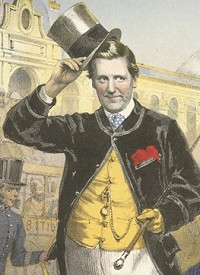
The vocalist here is, I think, one of the friends brought over by Moses Palmer. The song was written by Harry Clifton (pictured below) and is also known as “Put Your Shoulder to the Wheel.” Once again, I’ve found the words – in Songs for English Workmen to Sing , published this very year (1867)! Plus, in case the words alone make the song sound rather dull, there’s a fabulous recording of it being sung by Stanley Holloway.
Some people you’ve met in your time, no doubt,
Who never look happy or gay:
I’ll tell you the way to get jolly and stout,
If you will listen awhile to my lay.
I’ve come here to tell you a bit of my mind,
And please with the same if I can:
Advice in my song you will certainly find,
And “a motto for every man.”

Chorus.
So we will sing, and banish melancholy;
Trouble may come, we’ll do the best we can
To drive care away, for grieving is a folly;
“Put your shoulder to the wheel,” is “a motto for every man.”

We cannot all fight in this “battle of life,”
The weak must go to the wall,
So do to each other the thing that is right,
For there’s room in this world for us all.
“Credit refuse,” if you’ve “money to pay,”
You’ll find it the wiser plan;
“And a penny lay by for a rainy day,”
Is “a motto for every man.”

A coward gives in at the first repulse;
A brave man struggles again,
With a resolute eye, and a bounding pulse,
To battle his way amongst men;
For he knows he has one chance in his time
To better himself if he can;
“So make your hay while the sun doth shine!”
That’s “a motto for every man.”

Economy study, but don’t be mean:
A penny may lose a pound:
Through this world a conscience clean
Will carry you safe and sound.
It’s all very well to be free, I will own,
To do a good turn when you can;
But “charity always commences at home,”—
That’s “a motto for every man.”

To be continued.


Picture credits. Extract from sheet music for Come Where My Love Lies Dreaming: Image from University of Texas Arlington Libraries ⇗ website, and used under a Creative Commons licence . The Village Blacksmith, sheet music cover: Public domain image from Picryl . Harry Clifton (1863): Public domain image from Wikimedia Commons .

Waters Upton’s first amateur entertainments (Part 2)

Part 1

It’s Wednesday 20 January 1867 and we’re sat in the school room of the Industrial School just beyond the boundary of Waters Upton parish, trying our best not to be noticed. Luckily the assembled audience, containing many of the neighbourhood’s farming folk and others of a similar social standing, are focussed on the Reverend Halke. As it happens, he is delivering the next ‘act’. Are you sitting comfortably? Then we’ll continue.

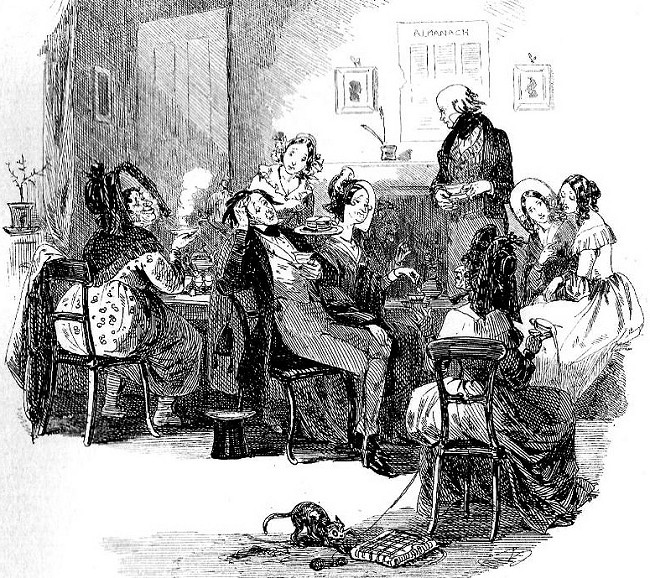
Reading, ‘Mrs. Gamp’s Tea Party,’ J. T. Halke.

For those unfamiliar with the works of Charles Dickens (in our present company, surely not many!), the Reverend Halke explains that the passage he will read is from The Life and Adventures of Martin Chuzzlewit. A hush falls over the room as those around us, many of whom are used to hearing the cleric reading on Sundays from an altogether different book, await this new experience.

“And quite a family it is to make tea for,” said Mrs. Gamp; “and wot a happiness to do it! My good young ‘ooman”—to the servant-girl—“p’raps somebody would like to try a new-laid egg or two, not biled too hard. Likeways, a few rounds o’ buttered toast, first cuttin’ off the crust, in consequence of tender teeth, and not too many of ‘em; which Gamp himself, Mrs. Chuzzlewit, at one blow, being in liquor, struck out four, two single, and two double, as was took by Mrs. Harris for a keepsake, and is carried in her pocket at this present hour, along with two cramp-bones, a bit o’ ginger, and a grater like a blessed infant’s shoe, in tin, with a little heel to put the nutmeg in; as many times I’ve seen and said, and used for caudle when required, within the month.”

As the privileges of the side-table—besides including the small prerogatives of sitting next the toast, and taking two cups of tea to other people’s one, and always taking them at a crisis, that is to say, before putting fresh water into the tea-pot, and after it had been standing for some time; also comprehended a full view of the company, and an opportunity of addressing them as from a rostrum, Mrs. Gamp discharged the functions entrusted to her with extreme good-humour and affability. Sometimes, resting her saucer on the palm of her outspread hand, and supporting her elbow on the table, she stopped between her sips of tea to favour the circle with a smile, a wink, a roll of the head, or some other mark of notice; and at those periods her countenance was lighted up with a degree of intelligence and vivacity, which it was almost impossible to separate from the benignant influence of distilled waters.

But for Mrs. Gamp, it would have been a curiously silent party. Miss Pecksniff only spoke to her Augustus, and to him in whispers. Augustus spoke to nobody, but sighed for every one, and occasionally gave himself such a sounding slap upon the forehead as would make Mrs. Todgers, who was rather nervous, start in her chair with an involuntary exclamation. Mrs. Todgers was occupied in knitting, and seldom spoke. Poor Merry held the hand of cheerful little Ruth between her own, and listening with evident pleasure to all she said, but rarely speaking herself, sometimes smiled, and sometimes kissed her on the cheek, and sometimes turned aside to hide the tears that trembled in her eyes. Tom felt this change in her so much, and was so glad to see how tenderly Ruth dealt with her, and how she knew and answered to it, that he had not the heart to make any movement towards their departure, although he had long since given utterance to all he came to say.

The old clerk, subsiding into his usual state, remained profoundly silent, while the rest of the little assembly were thus occupied, intent upon the dreams, whatever they might be, which hardly seemed to stir the surface of his sluggish thoughts.


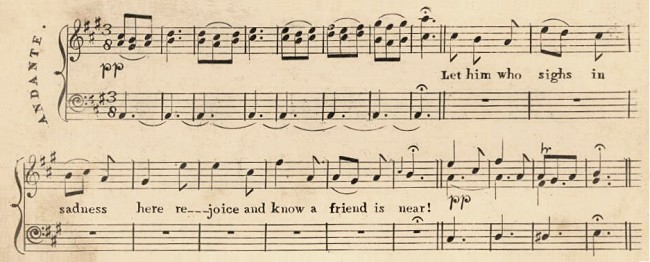
Duet, ‘The Minute Gun at Sea,’ Mr. Palmer and friend.

Now Mr Palmer returns to the spotlight. Last time he was part of a quartet (performing The Village Choristers), now he’s about to sing a duet from Up All Night or The Smuggler’s Cave, a comic opera written way back in 1809 by Samuel James Arnold ⇗, with music by Matthew Peter King ⇗. I took the liberty of stopping off in 1870 on my way here to pick up a copy of Diprose’s Standard Song Book and Reciter, which has the following version of the song (showing which parts are sung by each character). A minute gun, incidentally, is a cannon or gun fired at one-minute intervals as a sign of distress.

Juliana: Let him who sighs in sadness here,
Rejoice, and know a friend is near.

Heartwell: What heavenly sounds are those I hear?
What being comes the gloom to cheer?

1st: When in the storm on Albion’s coast,
The night watch guards his weary post
From thoughts of danger free,
He marks some vessel’s dusky form,
And hears amid the howling storm,
The minute gun at sea,

2nd: The minute gun at sea;

Both: And hears amid the howling storm,
The minute gun at sea.

2nd: Swift on the shore a hardy few
The life-boat man with a gallant crew,
And dare the dang’rous wave;
Through the wild surf they cleave their way,
Lost in the foam, nor know dismay—
For they go the crew to save,

1st: For they go the crew to save.

Both: Lost in the foam, nor know dismay—
For they go the crew to save.

1st: But O, what rapture fills each breast

2nd: Of the hopeless crew of the ship distressed.

Both: Then landed safe, what joys to tell
Of all the dangers that befell!—

1st: Then is heard no more,

2nd: By the watch on the shore,

Both: Then is heard no more, by the watch on the shore,

Both: Then is heard no more, by the watch on the shore,
The minute gun at sea.

Song, ‘The Fidgety Man,’ Mr. Hughes.

Now Mr Hughes is taking his second turn, but I need to pop back to 1870 to find a copy of his song even though it means missing his performance. (I think I’ve found it in Sharp’s New London Songster, but if this is it – and it’s the only song of this title I can find – it’s a strange choice for man to sing! Have a look and make your own mind up.)

Reading, ‘The Boy and the Beads,’ Mr. Weaving.

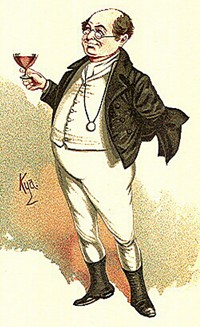
Edward Weaving is the Master of the Industrial School, where this event is taking. He and Mrs Weaving started here in 1860 and although they don’t yet know it, next year (1868) Mr Weaving will become the Master of the Drayton Union Workhouse. (Shhh, don’t tell – spoilers!) In the here and now, he’s going to read from Dickens’ Pickwick Papers. I wonder if he also recites this passage to his inmates?

“By the bye, Bob,” said Hopkins, with a scarcely perceptible glance at Mr. Pickwick’s attentive face, “we had a curious accident last night. A child was brought in, who had swallowed a necklace.”

“Swallowed what, Sir?” interrupted Mr. Pickwick.

“A necklace,” replied Jack Hopkins. “Not all at once—you know that would be too much; you couldn’t swallow that, if the child did—eh, Mr. Pickwick? ha! ha!”—Mr. Hopkins appeared highly gratified with his own pleasantry; and continued—”No, the way was this;—child’s parents were poor people who lived in a court. Child’s eldest sister bought a necklace—common necklace, made of large black wooden beads. Child being fond of toys, cribbed the necklace, hid it, played with it, cut the string, and swallowed a bead. Child thought it capital fun, went back next day, and swallowed another bead.”

“Bless my heart,” said Mr. Pickwick, “what a dreadful thing! I beg your pardon, Sir. Go on.”

“Next day, child swallowed two beads; the day after that, he treated himself to three, and so on, till, in a week’s time, he had got through the necklace, five-and-twenty beads in all. The sister, who was an industrious girl, and seldom treated herself to a bit of finery, cried her eyes out, at the loss of the necklace; looked high and low for it; but, I needn’t say, didn’t find it. A few days afterward, the family were at dinner—baked shoulder of mutton, and potatoes under it—the child, who wasn’t hungry, was playing about the room, when suddenly there was heard a singular noise, like a small hailstorm. ‘Don’t do that, my boy,’ said the father. “I ain’t a doin’ nothing,’ said the child. ‘Well, don’t do it again,’ said the father. There was a short silence, and then the noise began again, worse than ever. ‘If you don’t mind what I say, my boy,’ said the father, ‘you’ll find yourself in bed, in something less than a pig’s whisper.’ He gave the child a shake to make him obedient, and such a rattling ensued as nobody ever heard before. ‘Why, it’s in the child!’ said the father: ‘he’s got the croup in the wrong place!’ ‘No, I haven’t, father,’ said the child, beginning to cry, ‘it’s the necklace; I swallowed it, father.’—The father caught the child up, and ran with him to the hospital—the beads in the boy’s stomach rattling all the way with the jolting; and the people looking up in the air, and down in the cellars, to see where the unusual sound came from. He’s in the hospital now,” said Jack Hopkins, “and he makes such a strange noise when he walks about, that they’re obliged to muffle him in a watchman’s coat, for fear he should wake the patients!”

“That’s the most extraordinary case I ever heard of,” said Mr. Pickwick, with an emphatic blow on the table.

“Oh, that’s nothing,” said Jack Hopkins. “Is it, Bob?”

“Certainly not,” replied Mr. Bob Sawyer.

“Very singular things occur in our profession, I can assure you, Sir,” said Hopkins.

“So I should be disposed to imagine,” replied Mr. Pickwick.


Part 3


Picture credits. Mrs. Gamp Makes Tea: Sketch by ‘Phiz’ (Hablot K Browne), scanned by Philip V Allingham and taken from The Victorian Web ⇗. Extract from sheet music for The Minute Gun At Sea: Original image from Trove ⇗; out of copyright. Mr Pickwick: Public domain image from Wikimedia Commons ⇗.
Waters Upton’s first amateur entertainments (Part 1)

WATERS UPTON.
Amateur Entertainments.—An entertainment for the benefit of John Preece was given in the Schoolroom on the evening of Wednesday week. As this was the first thing of the kind ever attempted in the locality, considerable interest was manifested in its success, and the room was filled with by a respectable audience. The following programme was given in a satisfactory manner, the Rev. J. T. Halke occupying the chair […]
Wellington Journal, 2 March 1867, page 8.

What a joy to find details of the first amateur entertainments performed in Waters Upton! Well, not actually in the parish of Waters Upton, but just outside – the Schoolroom at which these events took place was that of the workhouse on the edge of Ercall Magna parish. But the entertainments were attended by at least some of Waters Upton’s residents, and what a joy it must have been for those who witnessed the proceedings. No doubt songs were sung and tales were told regularly on an informal basis in the village inns, and of course entertainments could be attended in Wellington (and possibly in other, larger villages in the district). Never before though had anything quite like this happened in Waters Upton or its immediate neighbourhood.

Behind the joy was a tale of tragedy, and heroism (the full story of which I have written for the Railway Work, Life and Death ⇗ project). On 29 December 1866 John Preece, a railway porter and gate keeper at Wombridge in Shropshire, had saved the life of a child who strayed onto the railway tracks as a train was approaching. The cost to John was a terrible one – struck by the engine, he was left with injuries so severe that he was taken to the Salop Infirmary in Shrewsbury. There, it was found necessary to amputate John’s right foot and hand, and the whole of his left arm below the shoulder. A subscription was set up “to alleviate the suffering incurred in this act of courage and humanity” (Eddowes’s Shrewsbury Journal, 16 January 1867).

The entertainments in the neighbourhood of Waters Upton were arranged to contribute to the funds being raised for the gallant Mr Preece and his family (he had a wife and two children). The first was held on Wednesday 20 January and the second, “given for the amusement of the working classes” on the following Friday (Wellington Journal, 2 March 1867).

The man occupying the chair at the entertainments, the Reverend J T Halke, was the subject of my first post to this blog: John Thomas Halke and the Church of Waters Upton. As you will soon see, he also contributed readings to the proceedings (and was clearly one of Charles Dickens’ many fans). Few if any of the other performers were Waters Upton residents, but several lived close by on the eastern side of Ercall Magna parish and others came from further afield.

Rather than simply give you the names of those who played, sang and read, and of the pieces they performed, as listed in the report from the Wellington Journal which I have quoted from above, I am going to try something a little different. Put on your most old-fashioned formal wear and prepare to step back in time, as I attempt to recreate an evening of songs, music, and readings in mid-Victorian rural Shropshire.

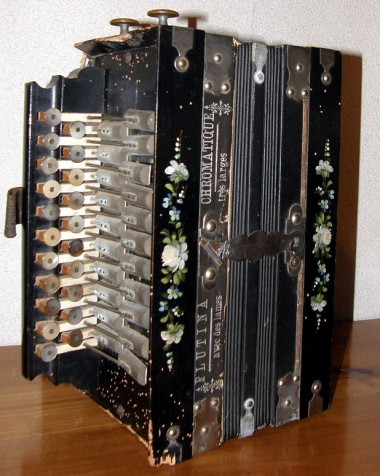
Grand march (pianoforte and organ flutina), Miss Humphreys and Mr. Hughes.

Unfortunately we have arrived just after the opening number, but that does mean we can make an unobtrusive entrance during the applause and take our seats at the back. The newspaper report of this evening’s programme tells us that a ‘grand march’ was just played, but there are several ‘grand marches’ so there’s no telling which one this was. I’m not sure who Miss Humphreys is. Mr Hughes on the other hand I believe have read about in the Shropshire papers, appearing at concerts as a member of the Shrewsbury Vocal Union. Have you ever seen a flutina ⇗ before? It’s a type of accordion. Ah, we’re almost ready for the second item.

Glee, ‘The Village Choristers,’ Mr. Palmer and friends.

I’ve not seen him before, but I’m pretty sure this is Moses Palmer of Redlake, over in Wellington. He’s given quite a few songs and recitations, sometimes accompanied by friends as now, and also by his son and daughter (I read about that in the Shrewsbury Chronicle of 8 January 1864). Would you believe he’s actually a mining agent / engineer? This is a glee for four voices, which should be interesting; here is one version of the words (which I found in a programme for the Wells Harmonic Society’s 1848-9 season ⇗) if you’d like to follow along:

Come, Brothers, tune the Lay,
For all who can must sing to-day.
Ye jovial Sons of Song!
Here at Pleasure’s summons throng.
Now pray let all be Harmony,
Beware, beware,
Now pray let all be Harmony,
Take care, take care,
That all who hear may praise the strain,
Again, and yet again.
Tra, la, la, &c.

Now I with PRIMO start,
I’ll take the {SECOND / BASSO} part,
The rest will try their choral art.
Now you, Sir, mind what you’re about,
Keep Time, or else you’ll all be out.
Now pray let all be Harmony,
Take care, take care,
That all who hear may praise the strain,
Again, and yet again.
Tra, la, la, &c.

So far there’s nothing wrong.
For ever live the Soul of Song!
Let all the burthen share,
And Music’s glorious praise declare.
Bravissimo! what Harmony:
Aha! aha!
Sweet Harmony, brave Harmony:
Aha! aha!
It is indeed a noble strain,
We’ll have it yet again.
Tra, la, la, &c.

Song, ‘Let us all speak our minds,’ Miss Shakeshaft.

Now, if I’m not mistaken this is young Charlotte Emma Shakeshaft, daughter of William and Sarah at Cold Hatton, just north of here in Ercall Magna. She doesn’t know it yet but she’s going to marry William Henry Atcherley from the Moortown, a little west of us and also in Ercall Magna. He’s her second cousin on their mothers’ sides (they have shared Icke ancestry) – and also my first cousin four generations removed. So many things we have to keep quiet about when we go back in time! Anyway, for those unfortunate enough not to have travelled back to 1867 with me, here are the words and a rendition of the song on YouTube:

Men tell us ‘tis fit that wives should submit
To their husbands, submissively, weakly,
Tho’ whatever they say their wives should obey,
Unquestioning, stupidly, meekly.
Our husbands would make us their own dictum take
Without ever a wherefore or why for it.
But I don’t and I can’t, and I won’t and I shan’t!
No, I will speak my mind if I die for it.

For we know it’s all fudge to say man’s the best judge
Of what should be, and shouldn’t, and so on,
That woman should bow, nor attempt to say how
She considers that matters should go on.
I never yet gave up myself thus a slave,
However my husband might try for it.
For I can’t and I won’t, and I shan’t and I don’t,
But I will speak my mind if I die for it.

And all ladies I hope who’ve with husbands to cope,
With the rights of the sex will not trifle,
We all, if we choose our tongues but to use,
Can all opposition soon stifle.
Let man if he will then bid us be still,
And silent, a price he’ll pay high for it.
For we won’t and we can’t, and we don’t and we shan’t,
Let us all speak our minds if we die for it.

This song was only published four years ago in 1863. It sound like an early feminist statement, but it might not be all that it appears. It was written by a man (William Brough), is intended as a comedic if not a satirical song, and at least one performer of the piece in the music halls sings it as “Mrs Naggit” ⇗. Mark my words though, in time the ladies will turn the tables and adopt this as a suffrage song!

Part 2


Picture credits. Musical notes: Public domain image from Pixabay ⇗. Flutina: Modified from a photo by Wikimedia Commons ⇗ contributor Bpierreb; used under a Creative Commons licence ⇗. Sheet music for Let us all speak our minds: From 8notes.com ⇗; used under a Creative Commons licence ⇗.

Late Victorian Christmases in Waters Upton – Part 2

Part 1.

Christmas carols (and other entertainments)

Pleasant Evenings with the Children.—On Wednesday and Thursday evenings, a miscellaneous entertainment was provided by the children attending Waters Upton School, consisting of duets, dialogues, musical drills, songs, in character, &c. The Rev. J. B. Davies, rector of the parish, presided each evening. The whole of the children acquitted themselves admirably, and gave much credit to Miss Taplin’s careful training. On the proposition of the Rector, hearty votes of thanks were accorded to Miss Taplin (head-teacher), Miss Union [actually Miss M Minor] for presiding at the pianoforte, and to the children for their entertainments, which were heartily applauded. The proceeds are for providing prizes for the children.
Wellington Journal, 23 December 1893.

Miss Taplin was not enumerated at Waters Upton on any of the censuses, but the entry for Waters Upton in the 1895 Kelly’s Directory includes “Miss Sarah Ann Taplin, mistress”. She had embarked on a teaching career early on, the 1881 census ⇗ showing Banbury-born Sarah at the age of 19 as an Assistant Schoolmistress lodging, with two other young women of the same profession, in the Hinckley, Leicestershire household of Schoolmaster and Schoolmistress Alfred and Fanny Webb. Ten years later in 1891 ⇗, Sarah was (along with another School Mistress) a visitor in a household at Wivenhoe in Essex. Her short spell at the National School in Waters Upton followed.

The newspaper report from 1893 quoted above does not explicitly connect the entertainments provided by the schoolchildren with Christmas. The timing of the events makes the association fairly clear however, and this account for the festivities of 1894 (published on 5 Jan 1895) leaves us in no doubt: “The Christmas Season has been kept in this village in the usual way. Before the Christmas holidays began the children of the Parish School gave two evenings’ entertainments of amusing songs and dialogues, in which they were well instructed by their teacher, Miss Taplin.”

I have not yet established exactly when Sarah Taplin left Waters Upton, but by 1901 ⇗ she was living and teaching at Shilton in her native county of Oxfordshire. The following year she was married ⇗, in Nuneaton, Warwickshire, to London & North West Railway worker William Meers. This did of course mean that her 20 year teaching career was over – but it also meant that Sarah was able to have children of her own.

An illustration of Holly leaves and berries.

The Wellington Journal’s summary of the seasonal celebrations of 1894 in Waters Upton continued by noting the beautiful decorations in the church “for the Christmas services by Mrs. L. V. Yonge, Mrs. Percival, and Miss M. Minor.” The offertories from these services were given to the Salop Infirmary, an institution I have written a partial history of (in four parts, so far) on my Atcherley family history website ⇗. The Journal’s report concluded:

At the end of the Christmas week there was also held a most successful entertainment in the Parish School. The room was well filled, and the proceeds, which realised over £5, went to pay for new church gates at the entrance to the churchyard. The programme was as follows:—Piano duet, Misses Annie and Alice Davies; song, Miss M. Minor (encored); song, Mr. Crewe; song (encored), Miss Lucy Rider; song (encored), Mr. Crewe; song (encored), Miss Sutton; piano solo, Miss Crewe; song (encored), Mr. Percival; song (encored), Miss Sutton (in place of Miss Nock, who was unable to be present). During the interval the rector (Rev. J. B. Davies) gave a short reading, and afterwards a very amusing piece was performed by four ladies and three gentlemen, the acting in which was of the highest character and was greatly appreciated. The performers were Rev. W. P. Nock, Dr. White, Mr. Ernest Rider, Mrs. L. V. Yonge, Miss Taylor, Miss Lucy Rider, and Miss Emmeline Heatley. At the conclusion the Rector proposed a hearty vote of thanks to all who had so ably taken part in the entertainment.

A whole cast of characters there, and what festive fun they had! Six of them (the Rev Davies and his daughters Annie and Alice, Mrs Yonge née Groucock, Miss Margaret Minor, and Miss Taylor) we have already met, in Part 1 of this story. Of the others, there are some I cannot identify with certainty: Doctor White, and Mr and Miss Crewe, may reveal themselves with further research. As was the case with some of their fellow celebrants, they may not have been Waters Upton residents. Emmeline Heatley appears from the 1901 census ⇗ to have been from nearby Eaton upon Tern (upstream from Waters Upton), where she was born around 1875, while the 1891 ⇗ and 1901 ⇗ censuses show that the Rev William P Nock (born around 1861) was Rector of Longdon upon Tern (downstream from Waters Upton).

Lucy Catherine Rider was from Wellington, where she was born and baptised in 1872 ⇗. She was a daughter of surgeon John Rider and his wife Mary, née Tennant. The Rider family had connections with Waters Upton parish – both John (born at nearby Crudgington) and Mary were buried at there (in 1887 and 1919 respectively, see Memorial Inscriptions: Rider). Ernest Rider, from Shawbury parish, was Lucy’s first cousin, his father being John Rider’s brother Thomas.

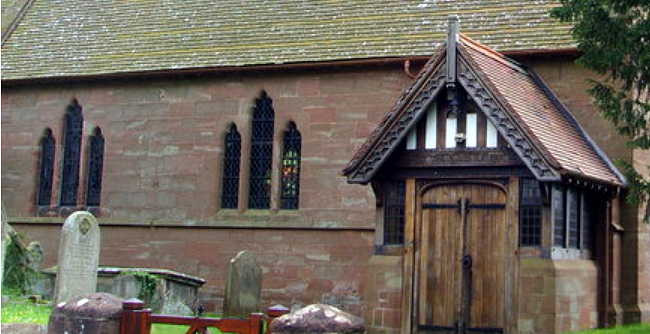
A photo showing part of the North side of St Michael's Church in Waters Upton. On the right is the porch, to the left of which there are two 3-light windows. Part of the roof can be seen, and also part of the churchyard with gravestones and a chest (or table) tomb.
A Holmes / St Michael’s Church / CC BY-SA 2.0 / Modified

That leaves Mr Percival, and also his wife (who helped to decorate the church). Herbert France Percival was born, surprisingly enough, in France (at Pau, now in Pyrénées-Atlantiques, Nouvelle-Aquitaine), on 7 March 1863 according to the Visitation of England and Wales ⇗ (Volume 2) published in 1894. Mary Jane Cornes was born at Longsight in Lancashire on 26 August 1859 and baptised ⇗ at Manchester Cathedral one month later. After a series of moves the Cornes family finally relocated to Crudgington where, on 3 August 1887, Mary Jane was married to Herbert Percival at Waters Upton. The couple settled (and Herbert farmed) in the parish where they wed, were enumerated there on the 1891 census, and their first two children (Geoffrey James France Percival and Sybil Mary France Percival) were born there in 1890 and 1892 respectively.

Herbert France Percival was included in the entry for the Waters Upton in the 1895 Kelly’s Directory, but he and Mary Jane had moved to Crudgington by the time their third and last child, Arthur Stanley France Percival ⇗, was born on 21 November that year. Possibly they had moved in with Mary Jane’s parents (Joseph Cornes, Mary’s father, died on 4 July 1897 and was buried at Waters Upton; see Memorial Inscriptions: Cornes).

Although the Christmas of 1894 was the last one the Percivals spent as residents of Waters Upton, it was not the last time they participated in the parish’s celebrations. The Wellington Journal of 1 January 1898 tells us this about an event which took place at Waters Upton on 29 December 1897:

Entertainment.—A concert was given in the school room, on Wednesday evening, by the church choir, assisted by a few friends. The performances were highly appreciated by a large audience, and credit is due to Miss M. Minor, the organist at the church, who had trained many of the choir to sing in public for the first time. The following took part:—The Choir, Miss A. Minor, Mr. P. Minor, Rev. L. V. Yonge, Mr. George Hall, Mr. Sam Dickin, Mr. Percival, the Misses Davies, Mr. W. A. R. Ball, Mr. Crewe, Willie Bennett, Mr. Tom Madeley, Mr. Tom Bennett.

The Percivals were still living at Crudgington in 1901 ⇗, but by 1911 had moved (with Mary Jane’s widowed mother) to Towyn in Merionethshire. As for the other performers besides Mr Percival, we have already met Margaret Minor, the Rev Yonge and the Misses Davies. How wonderful to see so many other names, of people from within and outwith the parish! In the latter category were A and P Minor (relatives of Margaret of Meeson no doubt, though I have yet to identify them), and Tom (Thomas) Madeley (probably the one born about 1872 at Crudgington, a farmer’s son who was still living there in 1901 ⇗ when he was a butcher).

George Hall was born in the neighbouring parish of Ercall Magna in 1878 but was probably by 1897 a resident of Waters Upton; certainly he was recorded there on the 1901 census when he was working as a sawyer. Samuel Robert Dickin was born a little further away at Little Ness, in 1875; he too must have moved to Waters Upton by 1897, and the 1901 census enumerated him there as a farmer, living with his sister Annie who was his housekeeper.

Brothers Willie (William) and Tom (Thomas) Bennett were both born at Waters Upton, in 1885 and 1880 respectively. They were sons of shoemaker Samuel Thomas Bennett and his wife Alice, née Lucas. Both were with their parents when the 1891 census was taken, and while William had moved on by 1901, Thomas remained (pursuing his father’s – and grandfather’s – profession, and appearing on the censuses of 1901 and 1911, and on the 1939 Register, at Waters Upton). Now there’s a man who saw a lot of Waters Upton Christmases!

An illustration of Holly leaves and berries.

All I want for Christmas is . . . a servant

WANTED, at Christmas, a General Servant, to do plain cooking, and make butter.—Apply, Mrs. J. B. Davies, Waters Upton Rectory, Wellington, Salop.
Wellington Journal, 17 November 1883.

While searching for stories of Christmas at Waters Upton, I came across advertisements for servants wanted “at Christmas” or “for Christmas”. The “most wonderful time of the year ⇗” (as Christmas was christened in the well-known song penned in 1963) was also one of the busiest times, especially for servants. More relevant to the phenomenon of yuletide recruitment however is the fact that Christmas Day was one of the four Quarter Days ⇗ in England and Wales, when rents were due – and servants were hired.

So as we have seen, at the end of 1883 the Rector’s wife Mrs John Bayley Davies (Susan Anslow Davies, née Juckes) was looking for a general servant who would cook, and make butter. The source of the milk for that butter was most likely cows kept on glebe land associated with the rectory.

In the Wellington Journal of 18 December 1886, two more ladies with Waters Upton addresses sought servants for Christmas. I was puzzled at first by Mrs Hoole, who was looking for a “trustworthy Servant” for “milking (two cows), attention to poultry, and plain cooking” for a family of two (“wages about £12”). Further research in the newspapers and then the censuses (e.g. that of 1881 ⇗) showed that Mr and Mrs Hoole were in fact living at Wood Farm, around 2 miles or so North of Waters Upton, in the parish of Stanton on Hine Heath. Presumably their post went through Waters Upton.

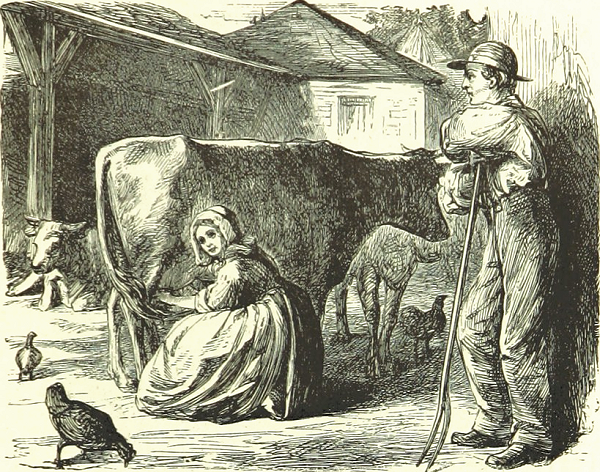
An old drawing of a maid milking a cow in a farmyard. Other cattle, and poultry, can also be seen, and on the right of the picture is a man leaning on a long-handled, two-pronged tool.

Mrs Shepherd, on the other hand, who wanted a “Servant Girl, at Christmas, age 15 to 16, who can milk or willing to learn” was definitely a Waters Upton resident. Jane Shepherd, née Rider, was recorded there on the 1891 census along with her husband Hugh, a farmer. The census shows that Hugh Shepherd was born at Old Deer (Aberdeenshire) in Scotland and that he was 15 years younger than his wife, who was born at Tattenhall in Cheshire. Baptism records for Hugh (in 1823 ⇗) and Jane (at Harthill in 1803 ⇗, the register giving the family’s abode as Broxton and a birth date for Jane of 8 December 1802) show that the age gap between the two was actually more than 20 years. When they married ⇗ on 12 Jan 1857 at Acton in Cheshire (by which time Hugh was already resident in Shropshire), both stated that they were of full age. Hugh was 33 and Jane was 54.

The 1891 census reveals something else about Jane – she was blind. This fact had also been recorded in 1881 ⇗ (when the Shepherds were living at Wrockwardine), but not on censuses from previous years. Presumably she lost her sight through an age-related condition such as macular degeneration or cataracts. Whatever the cause, it is clear that Jane’s inability to see did not prevent her from running household affairs. In these matters she may have been assisted by her niece Mary Lewis, who was enumerated with her at Waters Upton in 1891 as a “Ladies Companion”. Jane Shepherd died, and was buried at Waters Upton, in 1894 (see Death notices etc. and Wills & probate after 1858).

WANTED, Girl, between 14 and 16, as General, either now or at Christmas; character required.—Apply, Miss Walker, Waters Upton.
Wellington Journal, 6 December 1890, page 4.

I originally thought that the word ‘servant’ was accidentally omitted from the above notice, but having since compiled a page of Situations Vacant and Wanted adverts I have found several other examples of Waters Uptionians seeking a ‘general’. Did this ‘small ad’ result in the hiring of Sarah Ann Wilkes, the 16-year-old Lancastrian who appears on the 1891 census as a general servant in the Waters Upton household of Sarah Ann Walker? I have found no other records for Sarah Wilkes, but she may have been Sarah Ann Walker’s niece, enumerated as part of the Walker household in 1881; both aunt and niece shared the same name. The elder Sarah Walker ran a private school in Waters Upton for more than 30 years and so saw many Waters Upton Christmases. I will write about her in more detail another time.


All uncredited images from the British Library Flickr photostream; no known copyright restrictions.