Waters Upton in World War 2: Dorothy Tudge, Land Girl – Part 2

⇐ Part 1

Women Needed for Land Army
If war should come the work on the land would have to continue, and women would largely take the place of men. At the request of the Board of Agriculture and Fisheries a Shropshire Women’s Land Army Committee has been formed, with Viscountess Boyne, Bridgnorth, as chairman […] Already there has been a good response from the Shropshire women. Applicants are being interviewed, and short holiday courses arranged for those who have little or no knowledge of farm work. […]
Shrewsbury Chronicle, 7 July 1939, page 16.
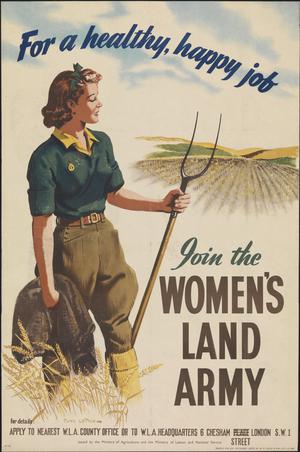
Women's Land Army poster. It depicts a young woman holding a pitchfork, set partly against an arable field. It says: For a healthy, happy job join the Women's Land Army.
Image: IWM (Art.IWM PST 6078 ⇗)

I have little doubt that Dorothy Tudge was one of the first Shropshire women to volunteer for the Women’s Land Army. Pinning down exactly when she became a ‘Land Girl’ is tricky though, given that the date is not shown on her WLA index card. Also, that card recorded Dorothy’s age as 29, which if accurate (hint: I’m pretty sure it wasn’t!) would mean that she joined in 1936, well before pre-WW2 recruitment had started.

There’s a little more to be gleaned from that index card. Dorothy’s WLA number was 3872, and her address was her family home: Whittingslow, Marshbrook, Shropshire. Her occupation when she joined was ‘Poultry worker’; her qualifications were “6 years practical experience in poultry work, specializing in laying battery work.” Evidently she had moved on from the dairy work she trained for in the mid-1920s.

Waters Upton

Dorothy expressed a preference for ‘mobile’ rather than local service, and she was duly placed on a farm at the other end of the county; her stint as a poultry worker at Waters Upton was most likely her first ‘posting.’ She was recorded on the National Identity Register on 30 September 1939 at The Grange, where she lived with 70-year-old widow Edith Moore and Edith’s daughter Eileen.

This type of accommodation for Land Girls ⇗ was known as private billets. Treatment of WLA ‘guests’ in such billets varied – I hope Dorothy’s experience was towards the ‘one of the family’ end of the scale. I suspect that her farming background would have counted very much in her favour.

While part of me wonders about the specifics of what her poultry work involved, another part of me wants to know how Dorothy spent her time when she was wasn’t working. Did she explore the local countryside? Take walks into the village to visit the shop or post letters, engaging in cheery exchanges of greetings or conversation along the way? Take part in evening social functions in the old school room (though these seem to have mainly taken the form of whist drives!)? She would almost certainly have accompanied Mrs Moore and her family to church services on Sundays.

I’ll write in more detail about the Moore family at a later date. Suffice to say for now that the 1934 Kelly’s Directory showed Edith’s husband Robert Edward Moore, farmer, at the Grange Farm; he died in 1935 and the 1937 Kelly’s Directory lists his son Robert Henry Moore in his stead. From the 1939 Register we can see that Edith continued living at The Grange, while her son Robert was based, with his wife and children, at The Grange Cottage (a little further down Catsbritch Lane). Robert was described in the Register as a ‘Mixed Farmer.’ I suspect that he did not have a poultry unit himself – I think it more likely that a tenant renting one of his cottages did, on a piece of land that went with the cottage.

There were three cottages, and nearly 190 acres of land, attached to The Grange Farm. All of this property was sold in September 1941 when the Moores moved on from Waters Upton. Perhaps that was when Dorothy departed too.
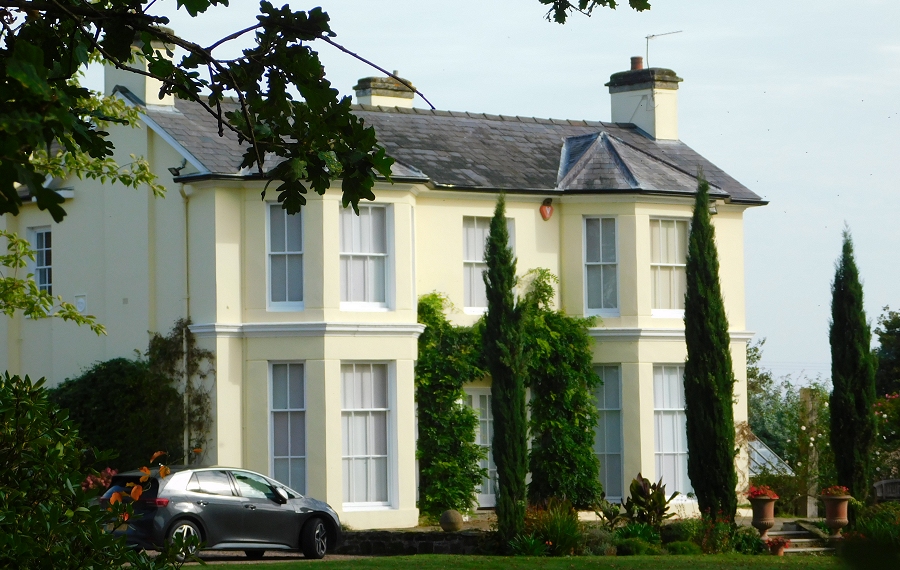
Photo of Waters Upton Grange. It is a two storey building with pale yellow walls. A car is parked outside, and there are a few ornamental trees in the garden.
Waters Upton Grange as it appears today. Photo by the author.

Much Wenlock, then Whittingslow once more

By July 1942, Dorothy was based on the other side of Wellington from Waters Upton, at Bradley Farm, just North of Much Wenlock. I know this because of a lengthy report in the Shrewsbury Chronicle of 23 October 1942 (page 8) headlined “Petrol Rationing Offences.” Miss Constance Jean Conroy was at the centre of this case, as the person who illegally received and used petrol coupons; she was fined £40 in respect of eight offences. Dorothy Tudge, one of the parties who had transferred coupons to Miss Conroy, was fined a grand total of £1!

Meanwhile, other members of the Tudge family were also involved in the war effort. Dorothy’s father William was a Lieutenant in the Whittingslow Home Guard Platoon (Shrewsbury Chronicle, Fri 21 May 1943, page 4). Her brother Herbert meanwhile had joined the RAF. His active service was sadly short-lived…

From All Round The Wrekin
News of Missing R.A.F. Officer
A few weeks ago Squadron-Leader A. J. [= H. J.] Tudge, son of Mr. W. B. Tudge, of Whittingslow, Marshbrook, was reported missing from an operational flight over Northern France. During the present week he has been officially reported to be a prisoner of war. The news has come as a great relief to squadron Leader Tudge’s relatives and friends in South Shropshire. […]
Shrewsbury Chronicle, 1 Aug 1941, page 4.

While confirmation that Herbert was a prisoner of war was good news considering the alternative, this meant that he spent most of the war in Stalag Luft III. The Shrewsbury Chronicle of 22 December 1944 (page 5) conveyed the news that Herbert’s parents had received a photo showed Herbert and other officers taking part in a play staged at the prison camp, “Blithe Spirit,” in which Herbert played a female part. A copy of the photo appeared in the paper’s edition of 12 January 1945 (page 6).

Notices in the Shropshire press towards the end of 1944 suggest that Dorothy Tudge was by then back on ‘home turf’ and had, along with her cousin Helen Maybery, turned her hand to rearing pigs. Those notices (including one on the front page of the Shrewsbury Chronicle of 13 Oct 1944) related to the annual sale of pedigree and commercial pigs at Shrewsbury, scheduled for 27 October. Those entering animals to the sale included “Misses Tudge and Maybery, Marshbrook (Large Blacks)”. After that, news on Dorothy’s whereabouts and activities is hard to find for a while. Let’s return to her obituary to pick up the latter part of her story.

Wadhurst
In 1953 she and her mother, who survives her, came to live in Wadhurst, where they made many friends. Miss Tudge was active member of the Women’s Institute, of which she was branch treasurer for several years, and was a supporter of many other local activities. She also worked for a number of charities and was a regular member of Tidebrook church […]
The Courier (Tunbridge Wells), 17 Dec 1976, page 22.
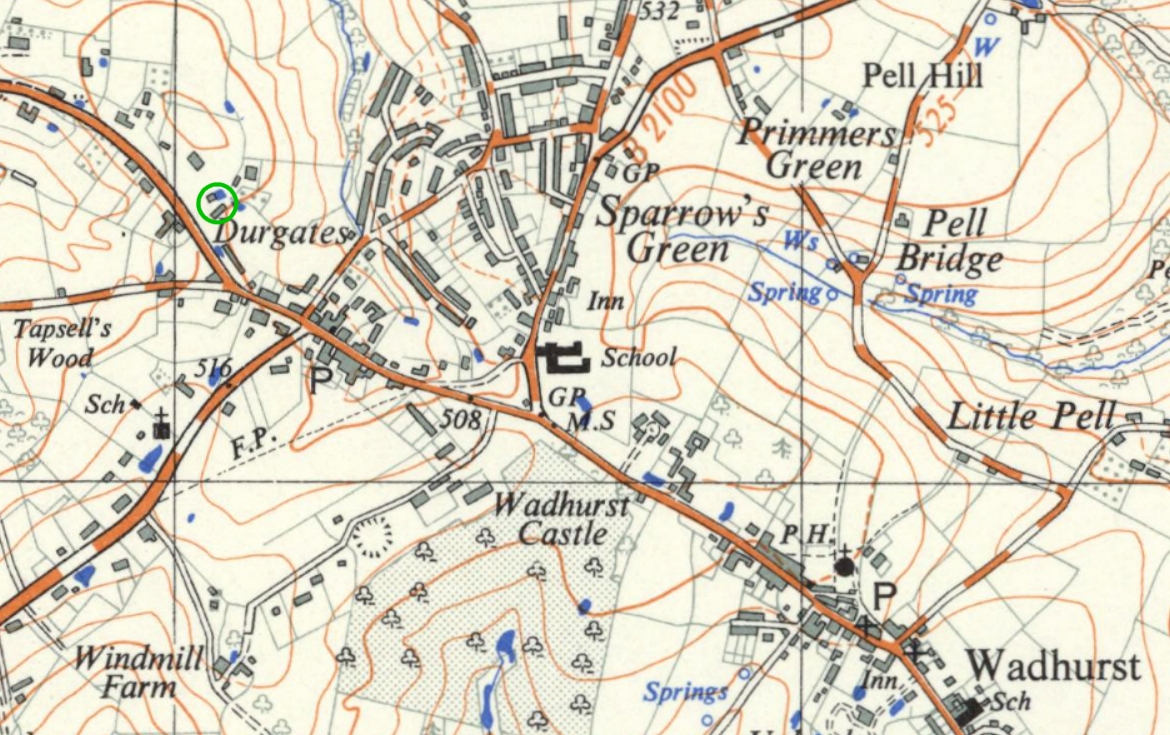
An extract from an Ordnance Survey map showing several settlements, with roads, streams, ponds, and some areas of woodland and wooded parkland. The main settlements are Sparrow's Green and Wadhurst; Primmers Green, Little Pell, Wadhurst Castle, Windmill Farm and Durgate are also shown.
Extract from a 1:25,000 scale Ordnance Survey Map covering Durgates, Sparrow’s Green, and Wadhurst. I have added a green circle to highlight Great Durgates Farm. Map reproduced with the permission of the National Library of Scotland ⇗ under a Creative Commons licence ⇗. Click on the image to view a larger version.

Dorothy’s father William Tudge went to Wadhurst too. He was included in the household at Great Durgates Farm on the 1955 electoral register for the East Grinstead Constituency. Sadly, he had died by the time the register came into force in February that year. The Wadhurst burial register shows that he was buried at the parish church on 10 December 1954.

Dorothy, as her obituary shows, became an active member of the local community she had joined. I have not found any information about the ‘other local activities’ she supported, or which charities she worked for. Her involvement with the local Women’s Institute, however, can be tracked – in part – via newspaper reports.

The earliest such report that I’ve discovered dates from June 1965, when Dorothy was one of three WI members who got full marks in the competition “My prettiest piece of china” (Kent & Sussex Courier, 4 June, page 16). Dorothy is recorded as Treasurer in 1969 (same title, 21 February, page 13), and in 1973 her efforts to collect information and photographs relating to the early years of Wadhurst WI were publicised (same title, 1 June, page 2, and Sussex Express, 5 October, page 20). The final snippet that I’ll share appeared in the Sussex Express, 30 December 1976, page 26:
WADHURST Women’s Institute held its Christmas fair at St George’s Hall. It opened on a sad note, when silence was observed in memory of Miss D. M. Tudge, a great worker for the branch for many years, who died recently. […].
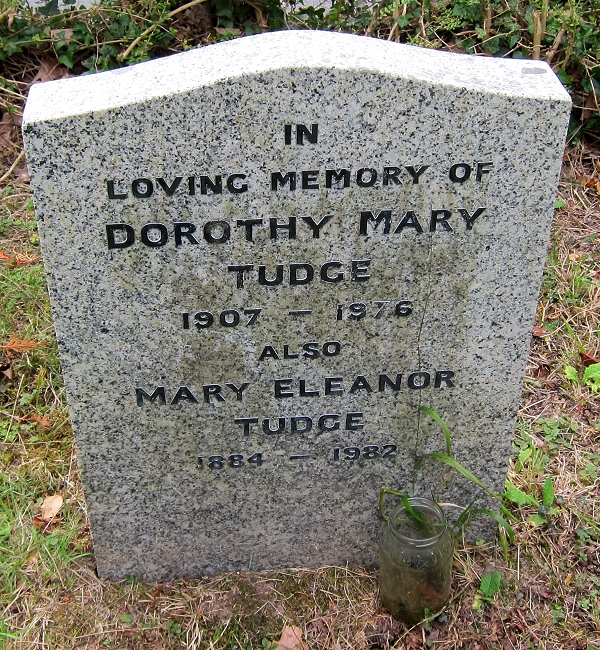
Photo of a simple grey gravestone. The inscription reads: In loving memory of Dorothy Mary Tudge, 1907 - 1976; Also Mary Eleanor Tudge, 1884 - 1982.
Photo from Find a Grave ⇗ – my grateful thanks to Rebecca Stewart for permission to use it here.

Dorothy’s obituary in The Courier concluded by noting that her funeral took place on 13 December 1976, at Tidewell. Her mother, after dying at the age of 97, joined her there in 1982.

A gravestone in Tidewell churchyard marks the spot where the former Land Girl of Waters Upton and her Mum lie together in eternal and well deserved rest.
Waters Upton in World War 2: Dorothy Tudge, Land Girl

Miss Dorothy Tudge, of Great Durgates, Wadhurst, died at the Kent and Sussex Hospital on Wednesday of last week. She was 69. Born into a farming family in Shropshire, Miss Tudge lived there for much of her early life and served through the Women’s Land Army throughout the war. […]
– The Courier (Tunbridge Wells), 17 Dec 1976, page 22.

Recently I looked again at one of the people recorded at Waters Upton when the National Identity Register was compiled at the end of September 1939. Dorothy M Judge, born 15 January 1907 – why could I find no other records for her? Looking again at an image of the register page, the answer dawned on me: I had misread Dorothy’s surname, the ‘J’ was in fact a ‘T’. Oops. (The transcribers working for Ancestry and Findmypast made the same mistake; I have submitted corrections to both.)

With Dorothy’s true name established I could finally find and link together records relating to her, and piece together what remains of her story. Where better to start than at . . . the end? Well, it struck me that Dorothy’s obituary, the ‘potted history’ of her life shared by way of remembrance just after her death, provides a framework upon which a more detailed account could be constructed – and can now be shared.

Stepaside

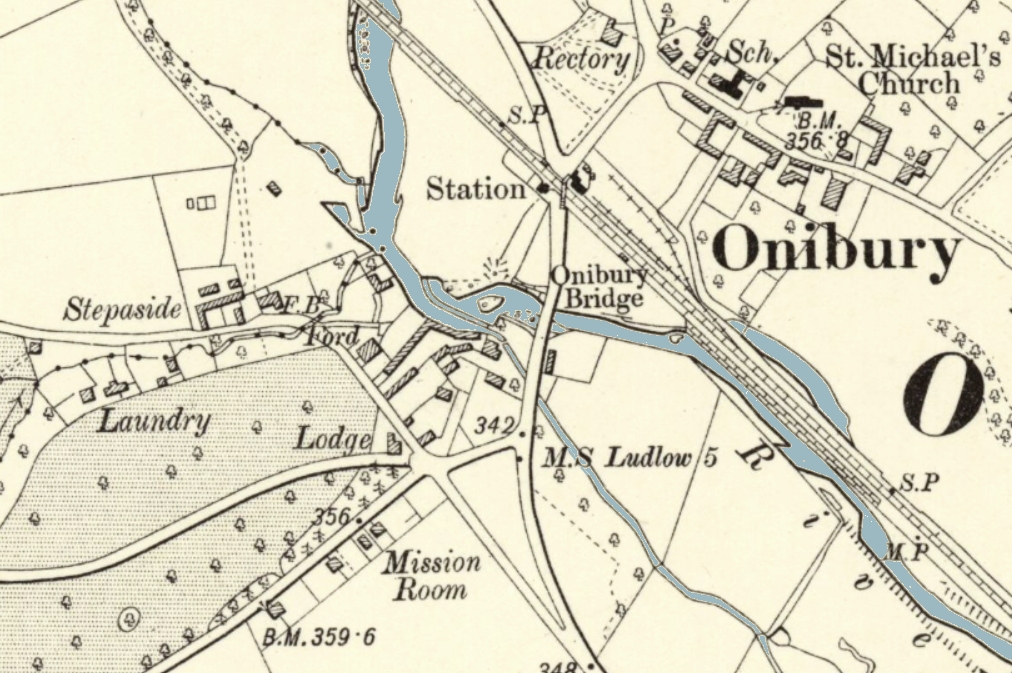
As we have seen, Dorothy Mary Tudge was born in January 1907, in Shropshire. I think the exact location was most likely the place where she and her family were enumerated on the 1911 census: Stepaside. This lies on the edge of the parish of Stokesay, then part of the Ludlow Registration District ⇗ in which Dorothy’s birth was duly registered ⇗. It also lies right next to the village and parish of Onibury.

Extract from a large scale Ordnance Survey map. In the top right corner is the small village of Onibury. A railway line runns across the map from near the bottom right corner to the top, just left of centre. A river follows a similar but more winding course, and is crossed by the railway in two places. West of the river, in otherwise open countryside, are scattered buildings including a farm named Stepaside.
The village of Onibury and nearby Stepaside, on a large scale Ordnance Survey map. Extract reproduced with the permission of the National Library of Scotland ⇗ under a Creative Commons licence ⇗. Click on the image to view a larger version.

The household at Stepaside recorded on the 1911 census was headed by Dorothy’s father William Bradford Tudge, aged 29, a farmer born at Leominster in the neighbouring county of Herefordshire. William’s wife was Mary Eleanor, 26, a native of nearby Wistanstow. She had been married to William for five years (their wedding took place at Stokesay on 14 March 1906 ⇗) and two children had been born of their union. Dorothy, then 4, we know about of course. The other child was a very new addition to the family: Herbert John Charles Tudge, age “under one month.” Enumerated with the Tudges were a maternity nurse, a ‘lady help,’ a general domestic servant, and a cowman.

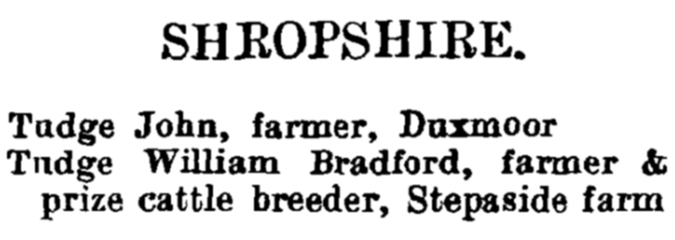
A small extract from a 1913 Kelly's Directory. It reads: Shropshire. Tudge John, farmer, Duxmoor. Tudge William Bradford, farmer and prize cattle breeder, Stepaside farm.

Stepaside Farm was still this family’s home in 1913, when William Bradford Tudge, “farmer & prize cattle breeder,” was listed in that year’s Kelly’s Directory of Shropshire ⇗ as part of the entry for Onibury (the snippet from the directory, on the University of Leicester website ⇗, is used under a Creative Commons licence ⇗). His details appeared just below those of his father John, who farmed at Duxmoor. These listings were repeated in the 1917 directory (viewed at Ancestry: Herefordshire and Shropshire Directories, 1917).

By 1921, William Bradford Tudge had taken his family to live with his parents John (71) and Helen (68) at ‘Duxmore’. William’s occupation was given as “Assisting Father.” Dorothy, then aged 14, was not with her family however. She was instead boarding elsewhere in the county.

Wellington

Hiatt Ladies’ College in Wellington was Dorothy Tudge’s home away from home, presumably for several years. This institution was established in 1847 ⇗ by Mrs Elizabeth Hiatt, née Keay (whose Crudgington-born father John, incidentally, was baptised in November 1801 at Waters Upton). Allan Frost, author of a book on the history the college, is quoted by the Shropshire Star in 2019 ⇗ as saying that it was “the first college intended purely for the education of young ladies in the country.”

It appears that the college did an excellent job too. A list of students with top educational attainments published in The Educational Times of 1 February 1906 (pages 91 ⇗ and 92) includes five names from Elizabeth Hiatt’s establishment, and there are other examples to be found.

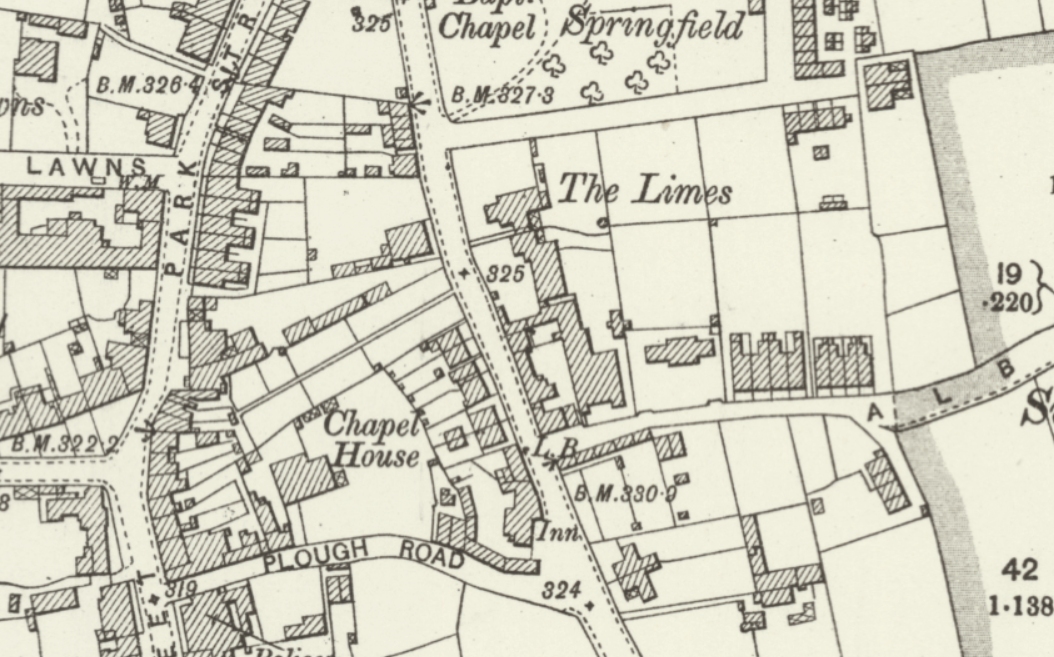
An extract from a large scale Ordnance Survey map showing streets and buildings in the Shropshire town of Wellington. Road names visible are Plough Road and Park Street. Named houses include Springfield, The Limes, and Chapel House.
King Street, Wellington (running North-South down the centre of this map extract) as shown by large-scale Ordnance Survey mapping. Mrs Hiatt used to live at The Limes; the college buildings lay immediately to the South, down to the junction with Albert Road. Map reproduced with the permission of the National Library of Scotland ⇗ under a Creative Commons licence ⇗. Click on the image to view a larger version.

The census of 1921 shows that in addition to the head, May Margaret Daniels, there were 11 other mistresses, teaching English, French, science, history, music, art, and gymnastics. In addition the college had a matron, an assistant matron, and a nurse. Dorothy Tudge was one of 55 pupils, aged from 10 to 17, most of whom came from Shropshire and the neighbouring counties of Cheshire, Staffordshire and Warwickshire.

I would love to know what Dorothy’s educational accomplishments were during her time at the college, not to mention her other experiences and how she adjusted to a very different way of life after her childhood on a farm. Who were her friends? What did they get up to when not in class? Did they break the rules, and if so, were they caught?

Cwm Head, Radbrook, and Whittingslow

As for the length of time Dorothy attended Hiatt Ladies’ College, my guess is that she was there from around 1917 to about 1923. A report in the Wellington Journal of 19 January 1924 (page 5) then places her back in the South of Shropshire, and pursuing an interest in dairy work. The report, covering a meeting of the Salop Agricultural Committee, noted that:

Dairy scholarships of the value of £15 each tenable for ten weeks at the Shropshire Technical School for Girls, Radbrook, near Shrewsbury, had been awarded to the following:— […] Marshbrook Butter-making Class— […] Miss Dorothy M. Tudge, Cwm Head House, Church Streeton; […]
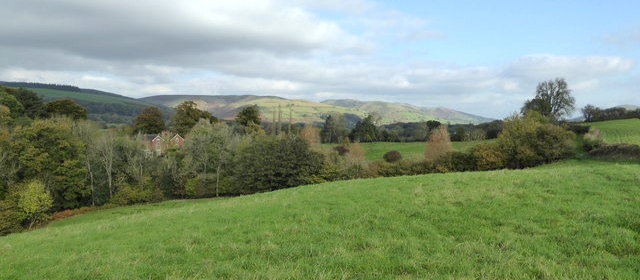
A photo of farmland in South Shropshire. In the foreground is a grassy field, on the far side of which is a hedgerow running from right to left, where there is a larger cluster of trees. Beyond are one or two more grassy fields, hedgerows, and trees, and in the distance there are some low hills. A pale blue sky above is partly covered by cloud.
View from above Cwm Head Farm. Photo © Jeremy Bolwell, taken from Geograph ⇗ and modified, used, and made available for re-use under a Creative Commons licence ⇗.

Did Dorothy delay taking up her ten week scholarship? Or did she stay at Radbrook for a lot longer than ten weeks? Some 18 months after the above report, the same newspaper carried (on 25 July 1925, page 5) details of the distribution of prizes at Radbrook Technical School. Amongst those presented with certificates and prizes by Lady Harlech was Miss D Tudge, who received a school certificate for dairy work – first class.

Over nearly all of the following 15 years, Dorothy seems to have ‘flown under the radar’ as far as the press was concerned. In complete contrast, her father and her maternal aunt, Mrs (Katie) Maybery, were regularly in the local newspapers thanks to their prize-winning herd of dairy Shorthorn cattle. From earlier examples of this media coverage (including the Shrewsbury Chronicle, 8 Apr 1932, page 8) it appears that the herd was established at Cwm Head around 1926, before the operation moved (in about 1929 I believe) to nearby Whittingslow Farm, Marshbrook. Though she spent time away from her family, these farms – especially Whittingslow – were home.

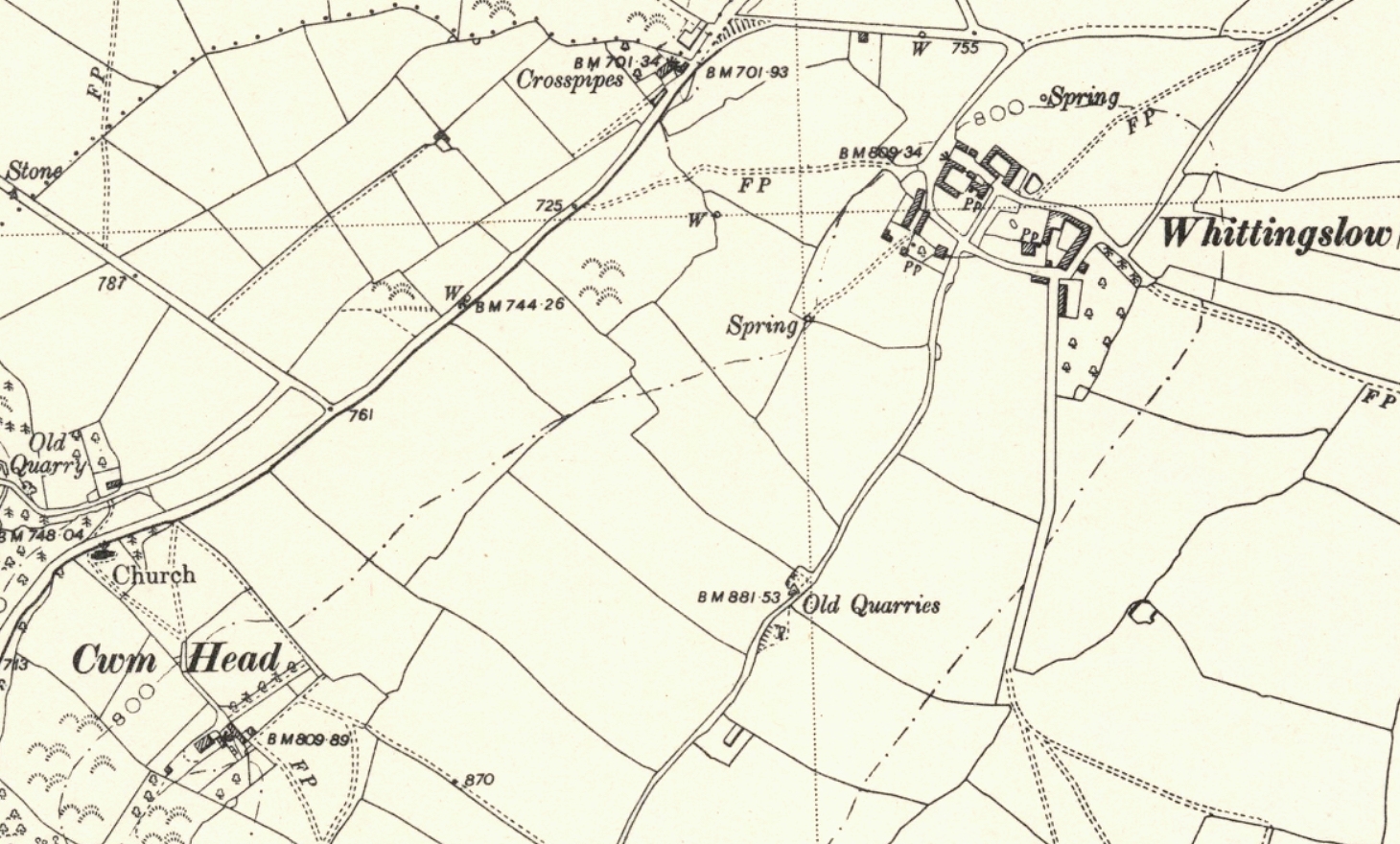
Extract from a large-scale Ordnance Survey map. Mostly it shows open fields and country lanes, but there is also the small hamlet of Whittingslow near the top right corner; a church and a farm named Cwm Head in the bottom left corner.
Cwm Head and Whittingslow, as shown on large scale Ordnance Survey mapping. Map extract reproduced with the permission of the National Library of Scotland ⇗ under a Creative Commons licence ⇗. Click on the image to view a larger version.

Surrey, and back to Shropshire

Dorothy spent at least part of this time living – and presumably working – in Surrey. Electoral registers record her there in 1930 and 1931 living at 75 Langley Park Road, Sutton, with Ada and Caroline Absale (sadly, she probably didn’t make jokes about them descending vertical rock faces or the sides of tall buildings with the aid of ropes). She also appeared in a 1933 electoral register, at Chalklands, Woodland Road, Little Bookham, with Thomas and Edith Weaver.

Those few occasions when Dorothy’s name did appear in the papers during this period were sad ones – the funerals of her grandparents. The last of these events was the interment of Dorothy’s paternal grandmother Helen Tudge, who died in on the 4th, and was buried on the 8th, of February 1937. Reporting on Helen’s death and funeral, the Shrewsbury Chronicle (12 Feb 1937, page 16) noted that she was a member of the local Women’s Institute and the Women’s Conservative Association, as well being a “fervent church woman”. At least one of those things would rub off on Dorothy.

Two years later, Britain was at war, and members of the Tudge family stepped up to play their parts. For Dorothy, this would include working at Waters Upton.

Part 2 ⇒

Finding Folklore in and around Waters Upton

“The history of no people can be said to have been written so long as its superstitions and beliefs in past times have not been studied.” These words were written by Professor John Rhys, M.A., back in 1881 ⇗, and quoted on the title pages of a publication I have been perusing in search of folklore connected with Waters Upton and its neighbouring parishes.

Shropshire Folk-lore: A Sheaf of Gleanings was published in three volumes from 1883 to 1886. The book was based on the collections of Georgina Frederica Jackson, and edited by Charlotte Sophia Burne. Collected within its pages were legends and traditions (concerning giants, devils, fairies, meres and more), followed by a shedload of superstitions, customs and beliefs including ghosts, witchcraft, cures, well worship, wakes and games, and concerning animals, plants, days of the week, and seasons from the new year to Christmastide.

From Waters Upton itself just one superstition is recorded in this Sheaf of Gleanings, but it concerns one of my favourite animals:

The Hare, like the cat, is associated with witchcraft, and therefore ominous. It is lucky to meet a hare (Waters’ Upton and Cold Hatton, in North Shropshire), but unlucky to see it run across the path.
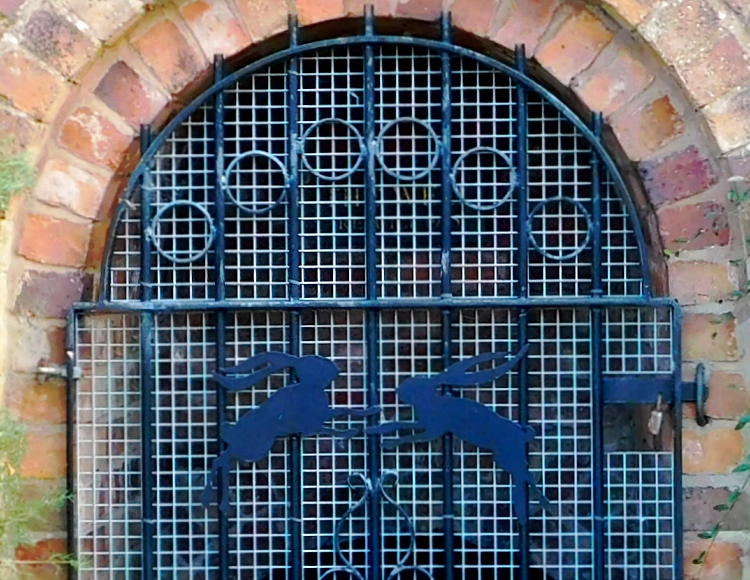
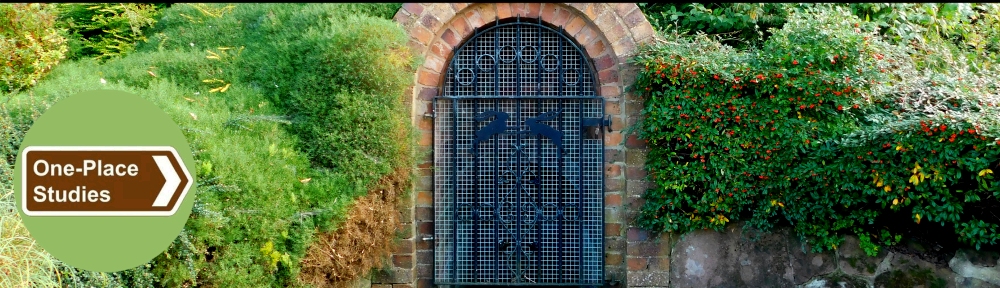
Photo showing part of a brick structure   in which there is an old well. An iron gate, with wire mesh, gives access (but it is padlocked shut). Added to the gate are two black silhouettes of boxing Brown Hares.
The silhouettes of two Hares on the gate to the well at the Western end of Catsbritch Lane, Waters Upton
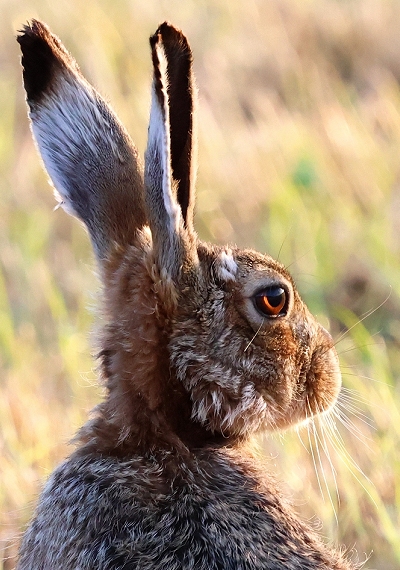
Photo showing the head and shoulders of a Brown Hare, with his or her long ears held erect. The Hare's body is facing away from us, but the head is turned to the right. The fur is mostly a white-grizzled brown, with more white on the ears, which have black tips. The eye is a golden brown colour, with a large black pupil and a thick black rim.

What then of the area around Waters Upton – parishes which some Waters Uptonians would have come from, and which many will have visited or had other connections with? Some of the customs, superstitions and beliefs documented in relation to those parishes may well have been practiced or held by – or at least known to – people over a wider area. And the fame (or infamy) attached to any individual believed to possess ‘special powers’ would certainly not have been confined to that person’s own parish. In this article, I’m going to look at a custom, and an individual, both very likely to have been familiar to Waters Upton residents in the 1800s.

The custom is one related to harvest-time, an important season in any rural parish. Before examining that custom however, I want to share a snippet from Shropshire Folk-lore which shows how the practice of harvesting underwent a revolution in the mid-19th century as a result of mechanisation.

PERHAPS nothing in all the range of country life has undergone a more complete and more recent change than has the ingathering of the harvest since the introduction of reaping-machines some twenty years ago. Even before that time, dissatisfaction with the old slow methods of reaping and ‘badging,’ or ‘swiving,’ was widely felt; and the sickle was already giving place to the ‘broad hook,’ and that to the scythe, when all alike made way for the machine. And the agricultural labourers of the present generation often do not even know the correct names, much less the uses, of the time-honoured tools with which their fathers toiled so patiently day after day from dawn to dark.

On then to “Crying, calling, or shouting the mare, […] a ceremony performed by the men of that farm which is the first in any parish or district to finish the harvest.” Miss Burne goes on to tell us (having noted in the preface to her book that “no true Salopian ever sounds the letter h”) that:

The object of it is to make known their own prowess, and to taunt the laggards by a pretended offer of the ‘owd mar’ to help out their ‘chem’ [team]. All the men assemble in the stackyard, or—better—on the highest ground on the farm, and there shout the following dialogue, preceding it by a grand “Hip, hip, hip, hurrah!”
“I ‘ave ‘er, I ‘ave ‘er, I ‘ave ‘er!”
“Whad ‘ast thee, whad ‘ast thee, whad ‘ast thee?”
“A mar’! a mar’! a mar’!”
“Whose is ‘er, whose is ‘er, whose is ‘er?”
“Maister A.’s, Maister A.’s, Maister A.’s!” (naming the farmer whose harvest is finished).
“W’eer sha’t the’ send ‘er? w’eer sha’t the’ send ‘er? w’eer sha’t the’ send ‘er?”
“To Maister B.’s, to Maister B.’s, to Maister B.’s” (naming one whose harvest is not finished).
“’Uth a hip, hip, hip, hurrah!” (in chorus). […]
[S]ometimes the mocking offer of the mare was responded to by a mocking acceptance of her help, as when an old man told Mr. Hartshorne, “while we wun at supper, a mon cumm’d wi’ a autar [halter] to fatch her away.” There were of course variations in the details of the braggadocio in different places, but it was universally practised, and though dying out, is by no means extinct. Mr. Gill dates its disuse at Hodnet about 1850-60 […].
In 1868 the unusually early harvest of that hot summer incited a party of men at Edgmond, whose employer had finished on the 31st of July, to celebrate the event by crying the mare. “Wheer shan we send ‘er?” asked one party.” T’owd Johnny Bleakmur,” came the reply. Any unusual excitement or rivalry would naturally revive the old custom in this way, even when it had been disused as a general thing. […]

From Crying the Mare and ‘owd Johnny Bleakmur (John Blakemore of Edgmond, I believe), to ‘owd (old) Thomas Light of Walton in Ercall Magna parish. He would certainly have been a character familiar to people living in nearby Waters Upton – and was very likely related to some of them. The following, contributed to Shropshire Notes and Queries of 13 February 1885 by a correspondent identified only as ‘A’, was included in Shropshire Folk-lore under Conjurors:

Between sixty and seventy years ago a man named Thomas Light had a high local reputation as a conjuror, fortune-teller, and “wise man.” He lived in the half-timbered cottage nearly opposite Mr. Webster’s house in the village of Walton (near High Ercall), and I have heard an old inhabitant of Walton say that he had seen as many as six vehicles driven up to the cottage in a morning. This conjurer carried on a roaring trade for many years, and people sought his advice and assistance from places as remote as the Cheshire and Staffordshire borders, and even out of Wales.
Cock-fighters brought him their birds to charm, and paid him for putting spells upon their opponents’ feathered representatives; farmers sought his power to remove cattle disease; wives and maidens came to him for their fortunes to be told, and the losers of stolen goods made him their detective. There were two “reception” rooms in the cottage, into one of which Light always retired to consult the stars or hold intercourse with his familiar spirits. Sometimes he could be heard by his customers wrestling with some supernatural presence, and the rattling of chains of course suggested that the conjurer was wrestling with the Evil One himself. […]
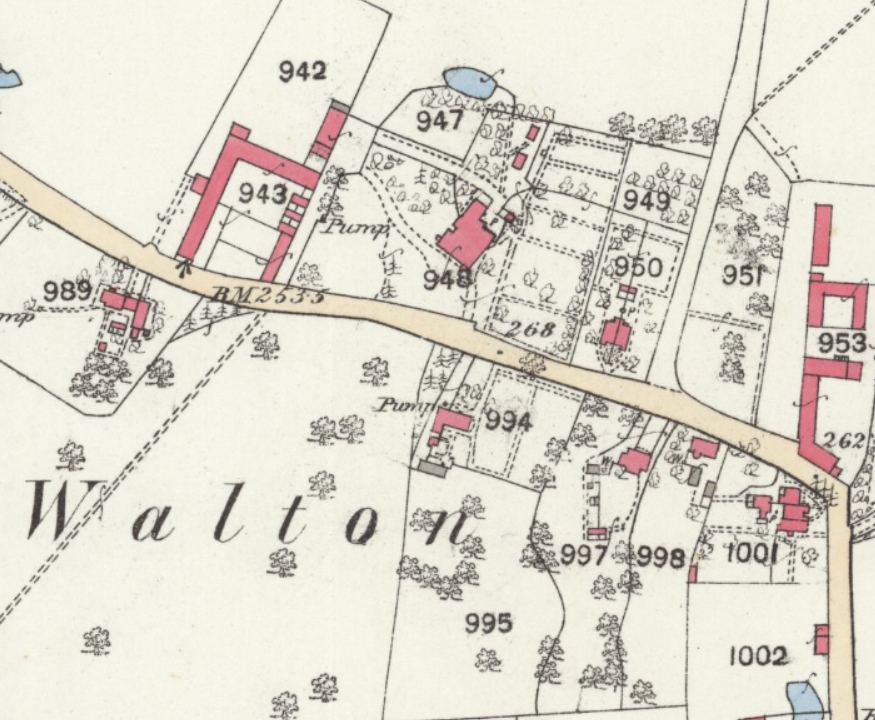
Extract from a large-scale Ordnance Survey map showing some of the houses and other buildings (all shaded in pink) of Walton village. The road running through the village is also shown, along with field and garden boundaries, three ponds, and many trees along field boundaries, in some of the gardens, and in some of the fields.
Extract from an Ordnance Survey map (25 inches to the mile, Shropshire XXIX.10) published 1881, reproduced with the permission of the National Library of Scotland ⇗ under a Creative Commons licence ⇗. This does not show things exactly as they were when the tithe apportionment map for Ercall Magna parish was drawn up in 1838, but that earlier map tells us that John Webster lived at the property in parcel number 943 here, while Thomas Light (who “lived in the half-timbered cottage nearly opposite”) occupied the house in parcel 994.

Thomas’ obituary, published in the Shrewsbury Chronicle of Friday September 10th, 1841 (page 3), very much suggests that he put the ‘con’ into ‘conjuror’! It makes for an entertaining read, and I reproduce it here as published, save for splitting the text into more than the original two paragraphs:

Death of an Eccentric Character.—On Sunday last, at Walton, near High Ercall, at the age of 94, Thomas Light, better known by the sobriquet of “Tommy Light the Conjuror.” This eccentric individual had from an early period of his life been a professor of the “Mysterious Art of Conjuring,” which he continued to practice with considerable pecuniary advantage to the close of his days.
His personal appearance was of no common order, as he always strictly adhered to the peculiar character of dress in fashion about the middle of the last century: a stranger on meeting “Old Tommy” was instantly struck with the excessive originality of his manner and costume; clad in a light sky blue “coat of other days” with an extravagantly lengthened linsey vest with large flaps descending over scanty “continuations.”
This antiquated oracle usually attended the markets to render his prophetic advice and assistance to all whom he could find possessed of the two great requisites for the successful development of his mystic craft, viz. Faith and Money; and it speaks but little for the intellectuality of the age, when it is considered what numbers of persons were sufficiently ignorant and superstitious to consult him, in all the various matters which have generally been subjects for the divinations and prophecies of this now (thanks be to the schoolmaster) almost extinct race of conjurers and fortune-tellers. His professional career was not merely confined to his own locality, but he was frequently applied to by the credulous rustics of the neighbouring counties.
His conjuring propensities were at one time the means of giving him rather an awkward introduction to the magisterial bench at Wellington; a lad at Ketley having robbed his employer both parties secretly applied to the sage, the one for the means of safety from detection, the other to have the property returned and the offender punished. Having instructed the lad to replace part of the stolen treasure, he informed the other that part of the missing property would be by his powers replaced.
The trick however having been detected by the parties, and it being suspected that he had received a large fee out of the missing cash, “Tommy” was pulled up before the magistrates and was committed to take his trial at the sessions, but was afterwards bailed out by a relative, to whom it is said he took a hundred sovereigns as security; he was however finally acquitted, but this had evidently the effect of making him more cautious in his future proceedings.
Among the many eccentric incidents of his life was that of purchasing a wife, who afterwards resided with him until death dissolved the unhallowed bargain. From this time her daughter by a legitimate husband superintended his domestic affairs, until at an advanced age she was accidentally burned to death.
Some time before his death, he gave several considerable sums of money, and has since willed further sums to different parties; a few days ago, several sovereigns and guineas were found among some old iron in a chest, in his dwelling, and many are of the conjectures that a horde yet remains to be discovered on the premises he occupied, which consisted of a cottage, orchard and garden, the property of the Duke of Cleveland.
“Old Tommy” was the oldest tenant on his Grace’s Ercall Estates. This extraordinary character possessed considerable originality of mind, and an exceedingly retentive memory, and remained in full possession of his mental faculties until the period of his death.

Searching the records for ‘Young Tommy’ (as I find myself thinking of the boy who grew up to become Tommy the Conjuror) I found that “Tho Son of Tho Light of Walton was baptized September ye twenty third” in 1748 at High Ercall. Depending on how soon after his birth he was baptised, Thomas would have been 92 or 93 years old when he died, not 94 as reported in the press. 92 was the age entered in the High Ercall burial register when Thomas was buried on 8 September 1841.

Just three months before his demise, Thomas was enumerated at Walton on the 1841 census. His age was recorded as 90 (rounded down to the nearest five years as was generally the case for adults on that year’s census) and he was of independent means (a status recorded as “Ind”). Living with him was a female servant, Jane Dabbs, age 55. His near neighbour Mr John Webster, mentioned above, was a 70-tear-old farmer. All were said to be natives of Shropshire.

Did any residents of Waters Upton avail themselves of Old Tommy’s mystical (or more likely, mythical) ‘services’ during his long life? I don’t think we will ever know for certain. At the very least, I’m sure he was the subject of many a conversation in the village’s hostelries, during his lifetime and for many years after!

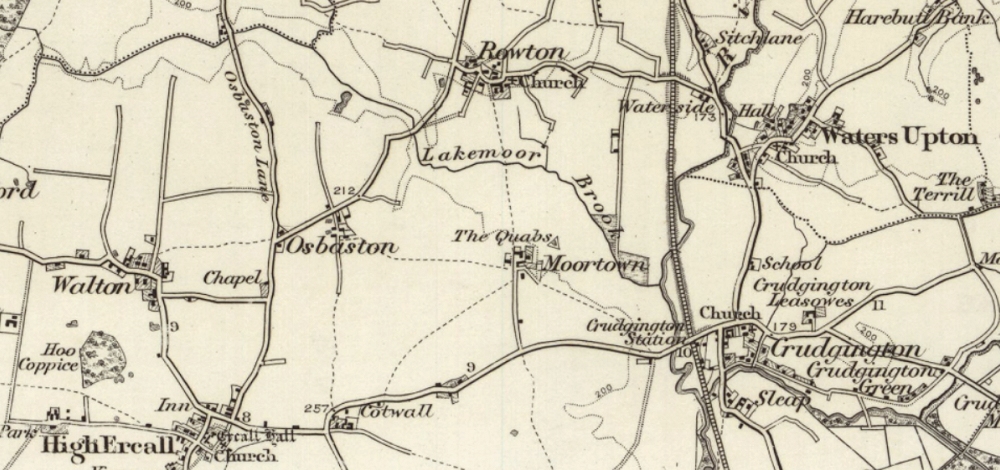
Extract from an old Ordnance Survey map showing the settlements of (from West to East) Walton, High Ercall, Osbaston, Rowton, Moortown, Sleap, Crudgington, and Waters Upton.
Extract from an Ordnance Survey map (1 inch to the mile, Sheet 138 – Wem) published 1889, showing Walton to the West and Waters Upton to the East. Reproduced with the permission of the National Library of Scotland ⇗ under a Creative Commons licence ⇗.