Imagine being the “afflicted Friends” – or indeed the family – of Thomas Plant. Off he went one day, saying he was visiting friends in the next county, but two months later he had not returned and no word had been received as to his whereabouts. Concern for Thomas’s wellbeing was heightened by the severe winter weather that followed his departure. The above notice in the Shrewsbury Chronicle continued:

“there never was known in this kingdom so deep a snow”
The description of the snowfall, and the fear expressed that it may have proved to be terminal for Thomas, were not exaggerations. Back on Saturday 13 January, the Shrewsbury Chronicle had reported (on page 3) that “the amazing fall of snow on Saturday night and Sunday last” had rendered the roads from Wolverhampton to Birmingham, and from there through Coventry to London, “intirely impassable.” Furthermore, a woman had been found dead in the snow in Worcestershire.
By the following Saturday, more reports of people lost in the snow had been received, and the Chronicle’s editor stated (again on page 3):
Difficulties were still being experienced during the ensuing week. Along with snow-related reports from around the country however, the Shrewsbury Chronicle of 27 January also carried (on page 3 once more) news of local acts of charity. In Shrewsbury itself, William Pulteney and John Corbet, esquires, had paid for nearly 40 wagonloads of coal to be distributed among the poor of the town. A similarly generous helping of coal was also given to the poor of Shrawardine and Montford, by Lord Clive. And thanks to Lord Pigot, “a loaf and cheese were given to every person in Bridgnorth that would accept of them” – that edible offering was accepted by nearly 900 people!
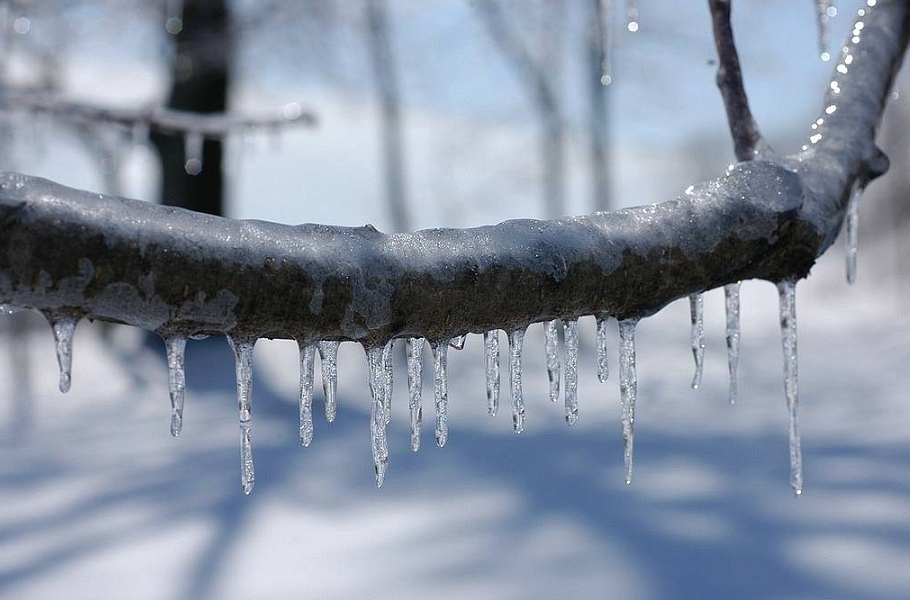
“The Wings of small Birds were so frozen that they fell to the ground”
Another source of information on the severity of the weather in Shropshire at the beginning of 1776 is the parish register of Whittington. In that register the rector, Reverend William Roberts, liked to record far more than just baptisms, weddings and burials. His entries for 1776, which I have transcribed from copies of the original register at Findmypast (another transcript can be found on Mel Lockie’s website ⇗) began:
of Snow wch began on the 6th at night blown
in drifts by a brisk Easterly Wind, that It lies
in several parts seven feet deep, & has render’d
it impossible for the Mails to pass […]
After a couple of baptisms, Rev Roberts’ weather observations continued at the end of January and into February:
severe that the London Mails have not yet
come in regularly. The 21st was remarkable for
intense cold, and the 27th nearly as keen.
froze as it fell, many accidents happen’d from the
slippery surface of the paths wch. were
perfectly glazed. Travellors Cloaths instead of being
wet, were So stiffly congealed about them, that It
was with difficulty They were got off. The Wings
of small Birds were so frozen that they fell to the
ground, many were pick’d up & others
Thaw began to discover the face of the earth, wch
had been hid for so long a time.
I think you can now fully appreciate the severity of the weather which descended upon Shropshire and many other parts of England, on the evening of the day after Thomas Plant left his home in Waters Upton in January 1776. Was he lost, or can we find the poor man?
To clarify: I’m not suggesting that we invent time travel and go back to look for our missing man. What I am wondering is, can we find Thomas in the records, and can we determine whether or not he survived, and returned to Waters Upton?
“A stout made Man”
Sadly I’ve found nothing about Thomas in the newspapers following the appeal that was made two months after he set off for Staffordshire. However, that appeal (a version of which also appeared on page 3 of Aris’s Birmingham Gazette on 11 Mar 1776) concluded with information about Thomas, to aid in his identification:

How fantastic to have this pen-picture of our wanderer from Waters Upton! If, by the way, you are intrigued (as I was) by the ‘Basket Buttons’, they were often known as Dorset buttons ⇗ and were hand-made by “repeatedly binding yarn over a disc or ring former.” Very popular in the 18th century apparently. Not that this helps us in tracking down Thomas!
A more useful piece of information for our purposes is Thomas’s age. It’s a little vague, and might not have been entirely accurate, but it helps to narrow down the field when searching for him in the records. In addition, we know that although he lived in Shropshire, he (supposedly) left home to visit friends in Staffordshire. Might he have had family in that county too?
To the above leads, I can add more from my abstracts of baptisms at Waters Upton. There are four, in the latter half of the 1750s and another in 1761 which are of particular interest. Anne, Thomas, and Margaret, children of Thomas and Ann(e) Plant, were baptised on 18 May 1755, 25 March 1759, and 26 April 1761 respectively. In between the first two of those children, with no parents named but almost certainly another child of Thomas and Ann, there was Martha Plant, baptised on 2 October 1757. I think it is reasonable to conclude that these were children of the man who went walkabout from Waters Upton in 1776.
This information allows a search not only for Thomas Plant’s own baptism, but also for his marriage to Ann. Carrying out such a search, I soon spotted parish register entries which very likely recorded both of these events.
On to Part 2 (A Man Found) ⇒
 Waters Upton One-Place Study